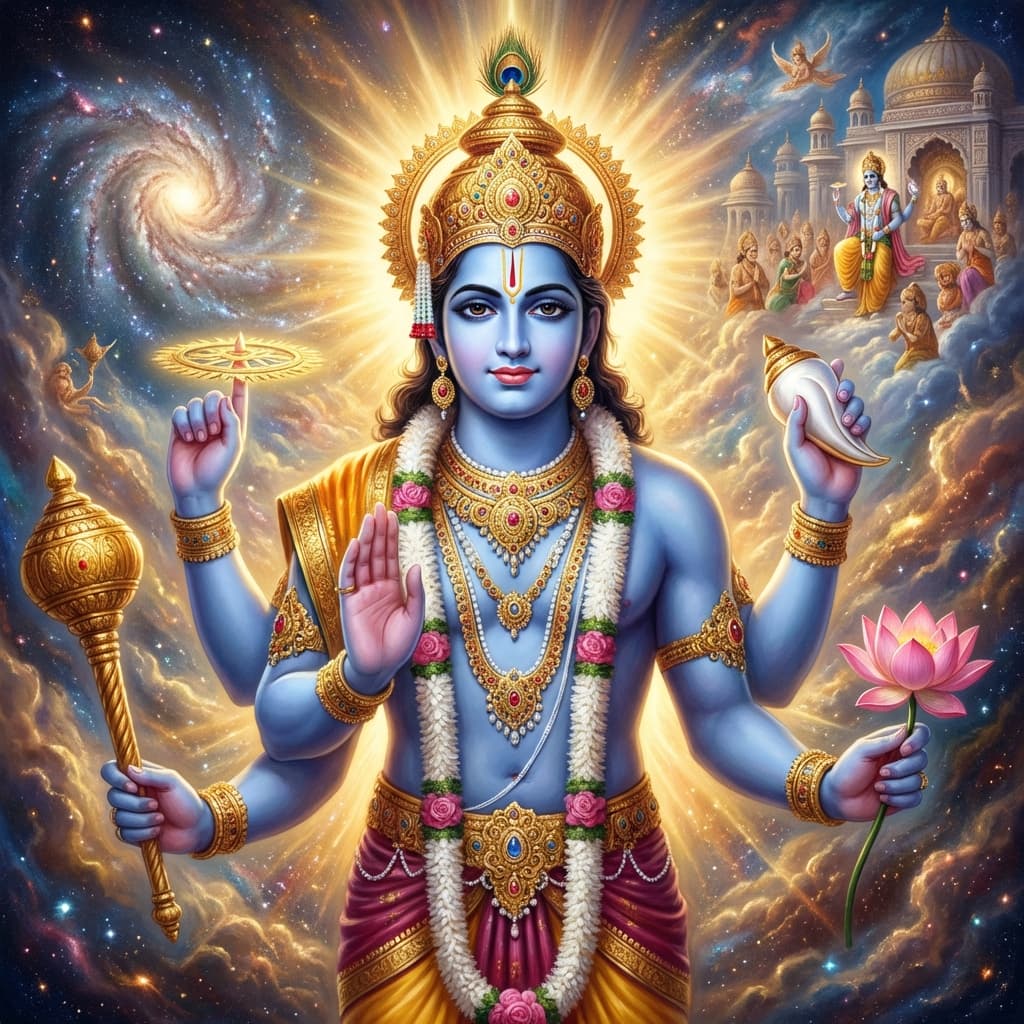
भगवान विष्णु की आरती

24

Aarti

ॐ जय जगदीश हरे, स्वामी जय जगदीश हरे।

भक्त जनों के संकट, क्षण में दूर करे॥

॥ ॐ जय जगदीश हरे..॥

जो ध्यावे फल पावे, दुख बिनसे मन का।

सुख सम्पति घर आवे, कष्ट मिटे तन का॥

॥ ॐ जय जगदीश हरे..॥

मात पिता तुम मेरे, शरण गहूँ मैं किसकी।

तुम बिन और न दूजा, आस करूँ मैं जिसकी॥

॥ ॐ जय जगदीश हरे..॥

तुम पूरण परमात्मा, तुम अन्तर्यामी।

पारब्रह्म परमेश्वर, तुम सब के स्वामी॥

॥ ॐ जय जगदीश हरे..॥

तुम करुणा के सागर, तुम पालनकर्ता।

मैं मूरख खल कामी, कृपा करो भर्ता॥

॥ ॐ जय जगदीश हरे..॥

तुम हो एक अगोचर, सबके प्राणपति।

किस विधि मिलूं दयामय, तुमको मैं कुमति॥

॥ ॐ जय जगदीश हरे..॥

दीन बंधु दुख हर्ता, तुम रक्षक मेरे।

करुणा-निधि दयालु, हाथ उठाओ मेरे॥

॥ ॐ जय जगदीश हरे..॥

विषय विकार मिटाओ, पाप हरो देवा।

श्रद्धा भक्ति बढ़ाओ, संतन की सेवा॥

॥ ॐ जय जगदीश हरे..॥

तन मन धन सब कुछ है तेरा, स्वामी सब कुछ है तेरा।

तेरा तुझको अर्पण, क्या लागे मेरा॥

॥ ॐ जय जगदीश हरे..॥
Aarti

Om Jai Jagdish Hare, Swami Jai Jagdish Hare.

Bhakt Janon Ke Sankat, Kshan Mein Door Kare.

|| Om Jai Jagdish Hare..||

Jo Dhyave Phal Pave, Dukh Binse Man Ka.

Sukh Sampati Ghar Aave, Kasht Mite Tan Ka.

|| Om Jai Jagdish Hare..||

Maat Pita Tum Mere, Sharan Gahoon Main Kiski.

Tum Bin Aur Na Dooja, Aas Karoon Main Jiski.

|| Om Jai Jagdish Hare..||

Tum Pooran Parmatma, Tum Antaryami.

Parbrahm Parmeshwar, Tum Sab Ke Swami.

|| Om Jai Jagdish Hare..||

Tum Karuna Ke Sagar, Tum Palankarta.

Main Moorakh Khal Kami, Kripa Karo Bharta.

|| Om Jai Jagdish Hare..||

Tum Ho Ek Agochar, Sabke Pranpati.

Kis Vidhi Miloon Dayamay, Tumko Main Kumati.

|| Om Jai Jagdish Hare..||

Deen Bandhu Dukh Harta, Tum Rakshak Mere.

Karuna-Nidhi Dayalu, Haath Uthao Mere.

|| Om Jai Jagdish Hare..||

Vishay Vikar Mitao, Paap Haro Deva.

Shraddha Bhakti Badhao, Santan Ki Seva.

|| Om Jai Jagdish Hare..||

Tan Man Dhan Sab Kuchh Hai Tera, Swami Sab Kuchh Hai Tera.

Tera Tujhko Arpan, Kya Lage Mera.

|| Om Jai Jagdish Hare..||

Highlights

"Om Jai Jagdish Hare" is the most widely sung aarti of Lord Vishnu (Jagdish), recited in almost every Hindu household.

It is considered a universal aarti that can be sung at the conclusion of worship for any deity.

The aarti describes the Lord as the ocean of compassion, the indweller (antaryami), and the master of all.

Information

About Vishnu Aarti

"Om Jai Jagdish Hare" is the most popular aarti sung in praise of Lord Vishnu (Jagdish). It is so universal that it can be sung at the close of worship for any deity, and it is recited daily in nearly every Hindu home and temple.

What does the aarti describe?

The aarti calls Lord Jagdish the complete Supreme Soul, the indweller (antaryami), the Supreme Being (Parbrahm Parmeshwar), and the master of all. It describes him as an ocean of compassion and the sustainer of the universe, who removes his devotees' troubles in an instant. The devotee offers body, mind, and wealth entirely to him.

Benefits of Vishnu Aarti

• Singing this aarti is believed to remove troubles and sorrows. • It is sung for happiness, prosperity, and the fulfillment of wishes. • It is believed to deepen devotion and remove vices. • Singing it at the end of any puja is considered to complete the worship.

Best Time to Recite

1. Singing it daily during morning and evening worship is considered auspicious. 2. It is traditionally sung at the conclusion of the aarti of any deity. 3. It is sung with special devotion on Ekadashi and other festivals associated with Vishnu.

How the Aarti is Performed

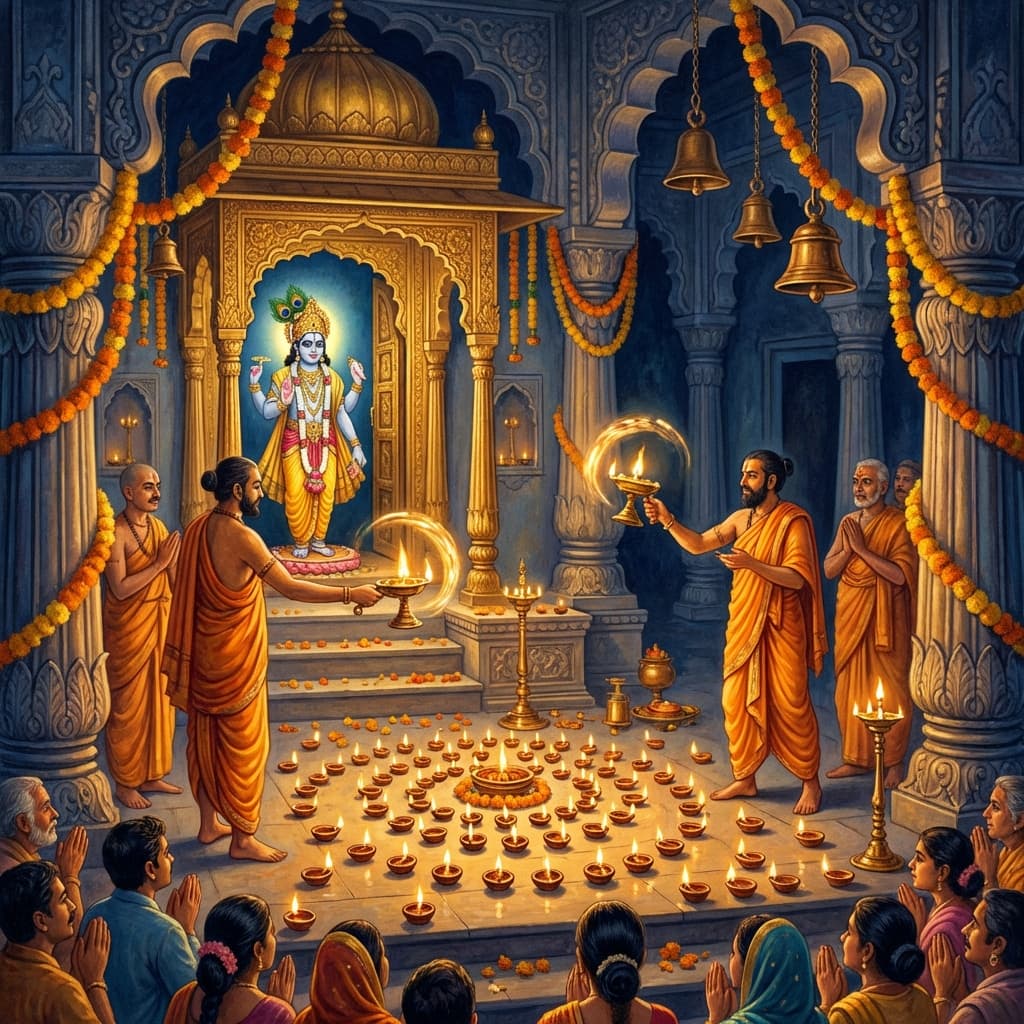
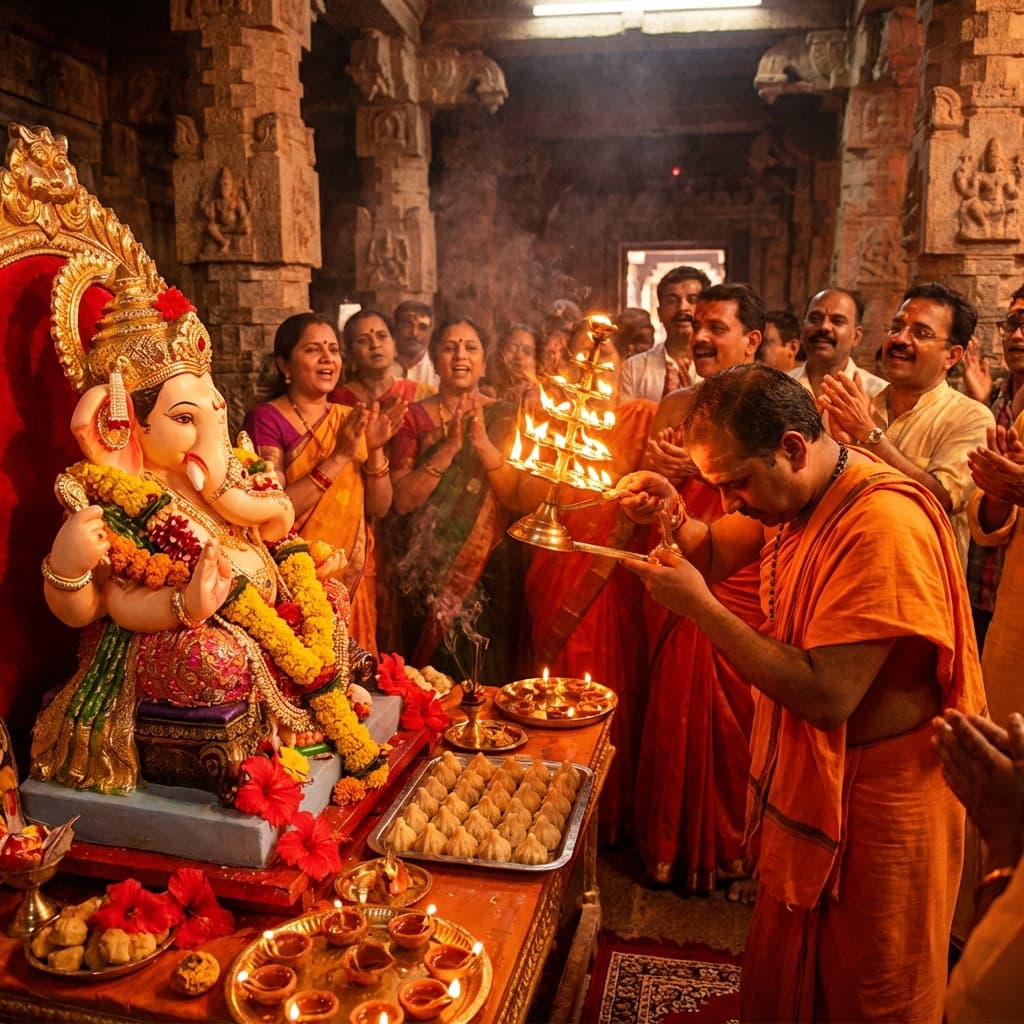
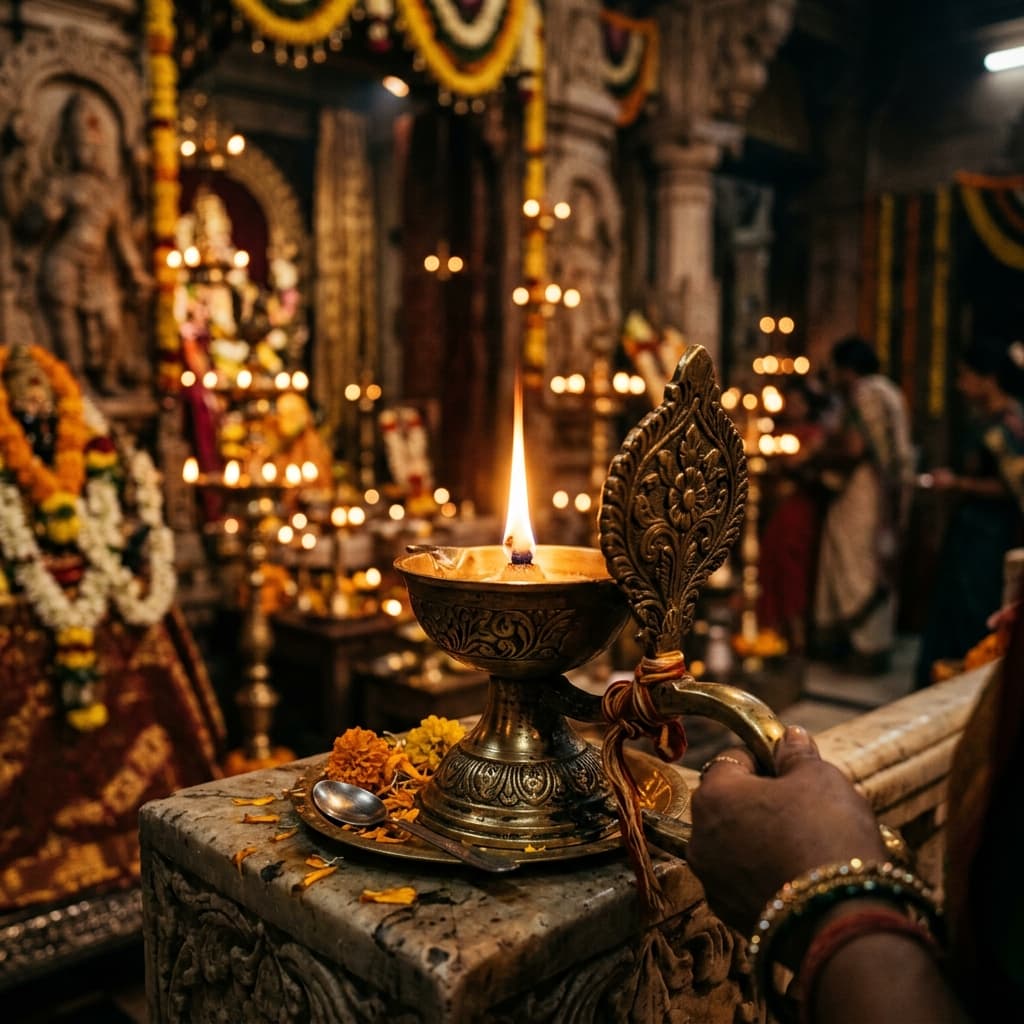
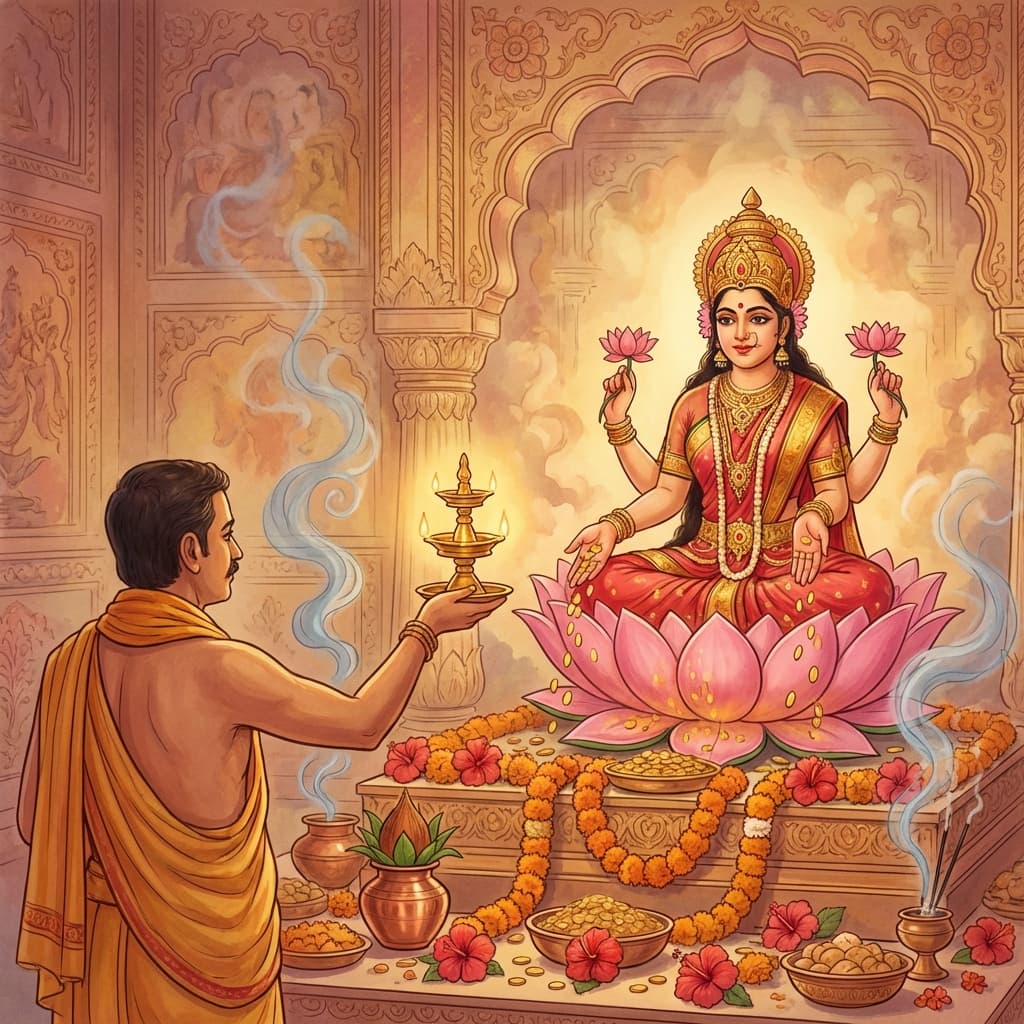
The aarti is sung before an image of Lord Vishnu or any deity, with a lit lamp and bell. Family members stand together to sing, and at the end the plate is circled before the deity, followed by the distribution of prasad.

Frequently Asked Questions

Who is "Om Jai Jagdish Hare" sung for?

It is the most popular aarti sung in praise of Lord Vishnu (Jagdish).

When should this aarti be sung?

It is sung daily during morning and evening worship, and traditionally at the conclusion of the aarti for any deity.

Why is this aarti called universal?

Because it can be sung at the end of worship for any deity, it is one of the most widely practiced aartis across Hindu tradition.

What does the aarti call the Lord?

It calls him the complete Supreme Soul, the indweller (antaryami), the Supreme Being, the ocean of compassion, and the sustainer of all.

What are the benefits of singing Vishnu Aarti?

It is believed to remove troubles, bring happiness and prosperity, and deepen devotion.

What does the line "Tan Man Dhan" mean in the aarti?

In this line, the devotee expresses offering their body, mind, and wealth entirely to God, symbolizing complete surrender.

Can this aarti be sung during worship of other deities too?

Yes, that is its most notable feature - it can be sung at the conclusion of worship for any deity.