Badrinath
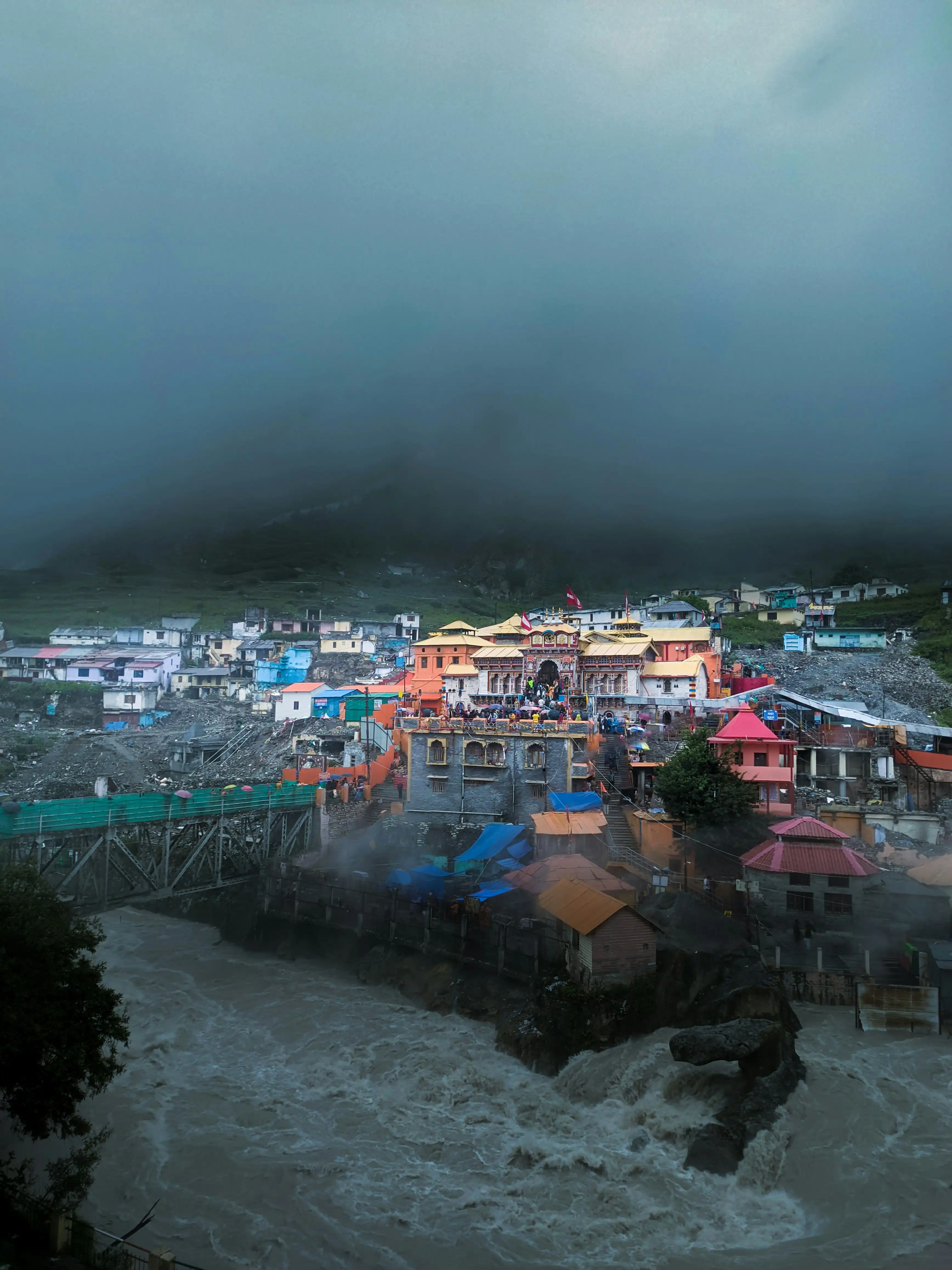
"The principal Char Dham shrine, the divine abode of Lord Vishnu"
History & Stories
- According to the Puranas, the sages Nar and Narayan performed penance at this site.
- It is believed that Adi Guru Shankaracharya rebuilt the temple in the 8th century and made it part of the Char Dham Yatra.
- Over time, various kings and devotees continued to restore and beautify the temple.
- The temple houses an idol of Lord Vishnu in the form of a Shaligram stone, considered to be self-manifested (Swayambhu).
How to Reach
Stay
- GMVN Tourist Rest House
- Badrinath dharamshalas (pilgrim rest houses)
- Mid-range and upscale hotels (advance booking required in season)
Safety Tips
- Being a high-Himalayan region, weather can change suddenly. Always carry warm clothing, an umbrella, and a torch.
- Some visitors may experience high-altitude sickness. Consult a doctor if needed.
- Avoid traveling during snowfall or landslides.
- Take special care of the elderly and children during crowded periods.
Map
FAQs
When does the Badrinath temple open and close?▼
The temple doors generally open on Akshaya Tritiya in May and close around Kartik Purnima (October-November). During winter, worship of the deity takes place at the Narsingh Temple in Joshimath.
Where is worship conducted during winter?▼
When Badrinath's doors close for winter, worship of Lord Badri is conducted at the Narsingh Temple in Joshimath, where devotees can offer prayers throughout the year.
How high is Badrinath and what is the weather like?▼
The temple sits at an altitude of about 3,133 meters above sea level. The weather is pleasant in May-June and September-October. July-August brings heavy rain and landslide risk, while the temple remains closed from November to April due to snow and cold.
Is it easy to reach Badrinath by road?▼
Yes, Badrinath is connected by road, though the roads are narrow and mountainous. Good bus and taxi services are available up to Joshimath, from where the 45 km stretch to Badrinath is covered by taxi or jeep. Watch for landslides and traffic along the way.
Is the journey difficult for elderly travelers or children?▼
The Badrinath yatra can be somewhat challenging for the elderly and young children due to altitude and weather. Protecting against the cold, ascending gradually, and carrying necessary medicines makes the journey easier. Anyone with a heart or breathing condition should consult a doctor first.
What are the stay and food options like in Badrinath?▼
Badrinath has dharamshalas, guest houses, and GMVN rest houses. Hotel bookings should be made in advance during the season. Most eateries are vegetarian, serving North Indian thalis, khichdi, paratha, tea, and more.
Is the Badrinath yatra part of the Char Dham Yatra?▼
Yes, Badrinath is the principal shrine of the Char Dham Yatra (Yamunotri, Gangotri, Kedarnath, and Badrinath) as well as the Chhota Char Dham. Visiting Badrinath at least once in a lifetime is considered auspicious for Hindu pilgrims.
What major festivals are celebrated in Badrinath?▼
The Badri-Kedar Utsav (June) and Mata Murti Ka Mela (September) are especially well known here. Grand ceremonies are also held when the temple doors open and close, drawing thousands of devotees.
Are mobile phones and cameras allowed inside the Badrinath temple?▼
Mobile phones and cameras are not allowed inside the sanctum. Photography and videography within the temple complex depend on the temple management's permission. Devotees are asked to exercise restraint out of respect for the site's sanctity.
What should I keep in mind during the journey?▼
Carry warm clothing, an umbrella/raincoat, comfortable footwear, medicines, and a torch. Breathlessness can occur due to altitude, so move gradually. Crowds are heavy in season, so book accommodation and travel in advance.