
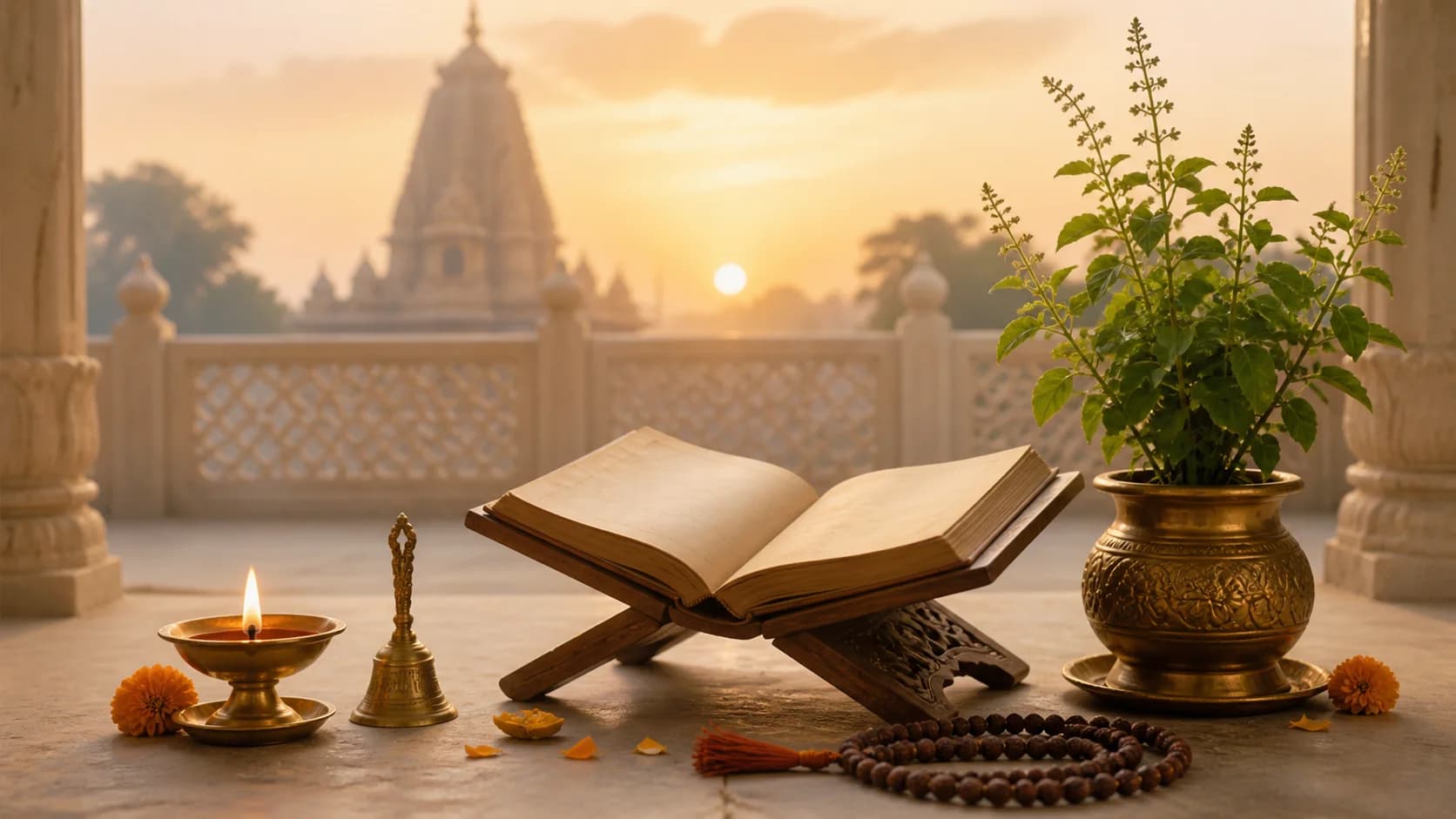
A Simple Hindu Morning Prayer Routine in 10 Minutes
Begin the day with a practical 10-minute devotional routine combining a mindful pause, diya, naam jaap, a short prayer, intention, and gratitude.
Why a Short Morning Practice Works
The quiet of morning offers a chance to guide the mind, but complicated routines are often abandoned within days. A fixed ten-minute practice is realistic for students, working people, and devotees caring for a family.
The aim is not to recite many prayers. It is to give the mind a moment of divine remembrance before phones and worries take over. A small steady practice can gradually become the foundation for deeper sadhana.
Minutes 1–2: Wakefulness and Gratitude
Before leaving bed, look at your palms and recite the traditional Karadarshan verse, or simply give thanks for a new day. Before placing your feet on the floor, bow mentally to Mother Earth. This brief pause begins the day with gratitude rather than entitlement.
Wash your hands and face, drink water, and sit at your prayer space. Keep the phone away for a few minutes. Take three easy breaths to settle the body; there is no need to hold the breath or attempt difficult pranayama.
Minutes 3–7: Diya, Mantra, and Naam Jaap
Light a diya in a safe place and offer water or a flower to your chosen deity. Recite one short opening prayer or chant “Om” three times. Then repeat your chosen divine name or mantra 27 times—such as Ram Naam, Om Namah Shivaya, or Om Namo Bhagavate Vasudevaya.
Keeping one mantra for a few weeks can help attention settle. When the mind wanders, do not criticize yourself; gently return to the sound and meaning of the mantra.
Minutes 8–10: Reading, Intention, and Silence
Read one short shloka, a few lines of stuti, or one Bhagavad Gita verse with its meaning. A little daily reading connects wisdom with conduct. Then choose one sattvic intention for the day—gentle speech, honest work, or helping one person.
End with one minute of silence and a prayer for everyone's well-being. Let the diya burn only where it can be supervised, or extinguish it respectfully when needed. Then begin the day's first digital task.
When You Have Only Two Minutes
If you are running late, do not abandon the practice entirely. Take three breaths, repeat your deity's name 11 times, choose one wholesome intention, and bow. This short form keeps the thread of consistency intact.
On weekends, extend the same sequence with aarti, chalisa, or Gita reading. Do not compare your practice with anyone else's; choose a routine that remains balanced with health, family, and responsibilities.
Frequently asked questions
Questions devotees often ask
What is the best time for morning prayer?
The quiet time around sunrise is traditionally preferred, but the best time for you is one you can keep consistently each day.
Which mantra should I chant in the morning?
Choose your deity's simple name or a familiar mantra. Understanding and steadily repeating one mantra is usually more helpful than changing it often.
Can I pray in the morning without lighting a diya?
Yes. During travel, in a hostel, or where flames are unsafe, offer light mentally and continue with naam jaap or prayer.

Gita Wisdom
How to Start Reading the Bhagavad Gita: A Daily Guide for Beginners
Begin reading the Bhagavad Gita without feeling overwhelmed by its 700 verses. Learn how to choose a translation, reflect on the meaning, and build a steady daily practice.
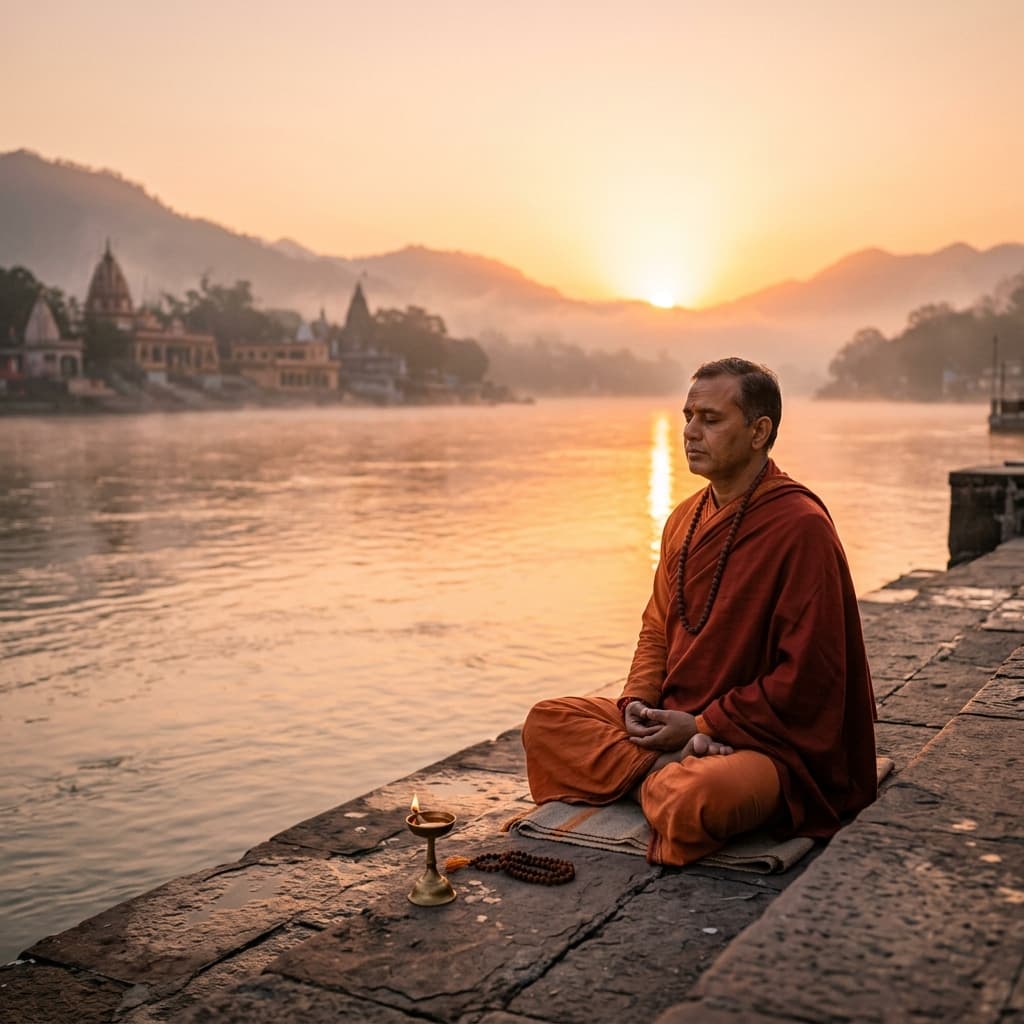
Naam Jaap
5 Miraculous Benefits of Ram Naam Jaap: The Science of the Mahamantra
Ram is not merely a name, but the energy of the entire cosmos. Explore how chanting Ram Naam brings deep internal mental peace.