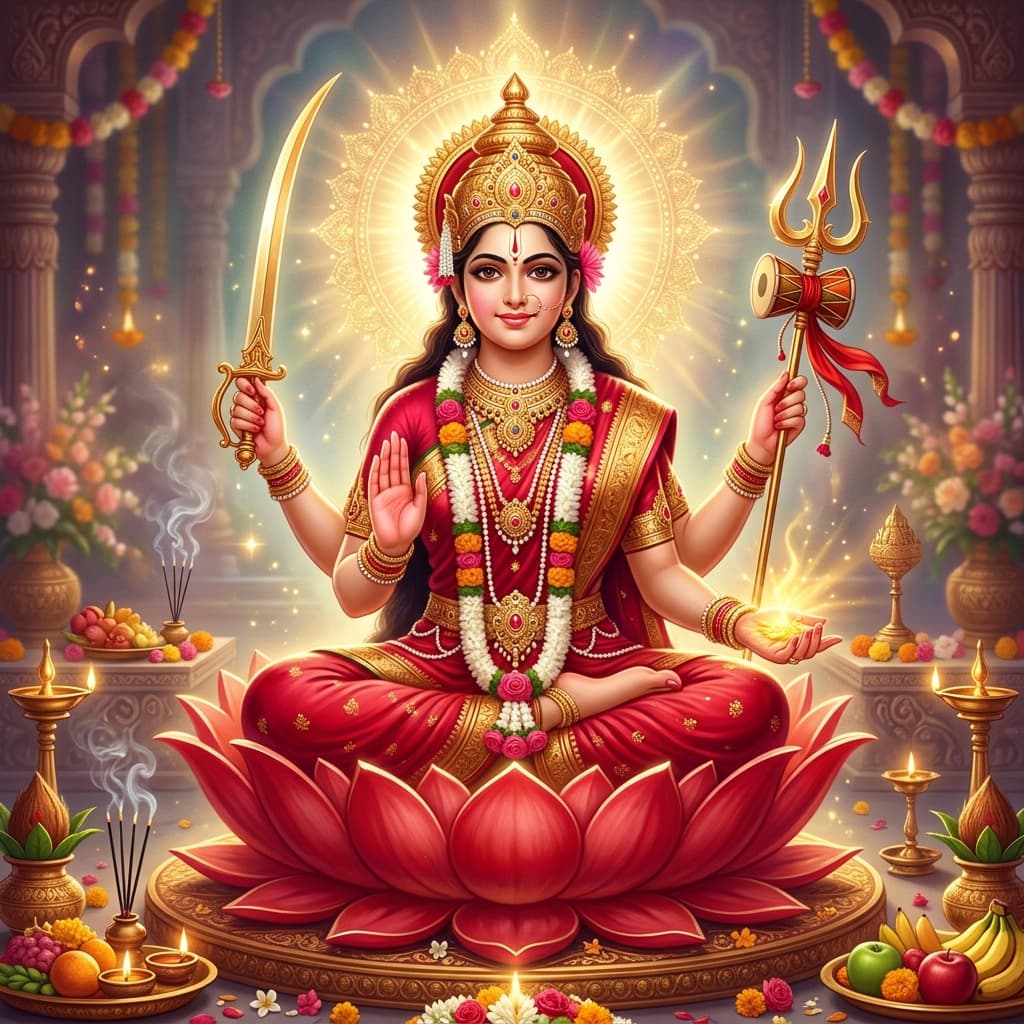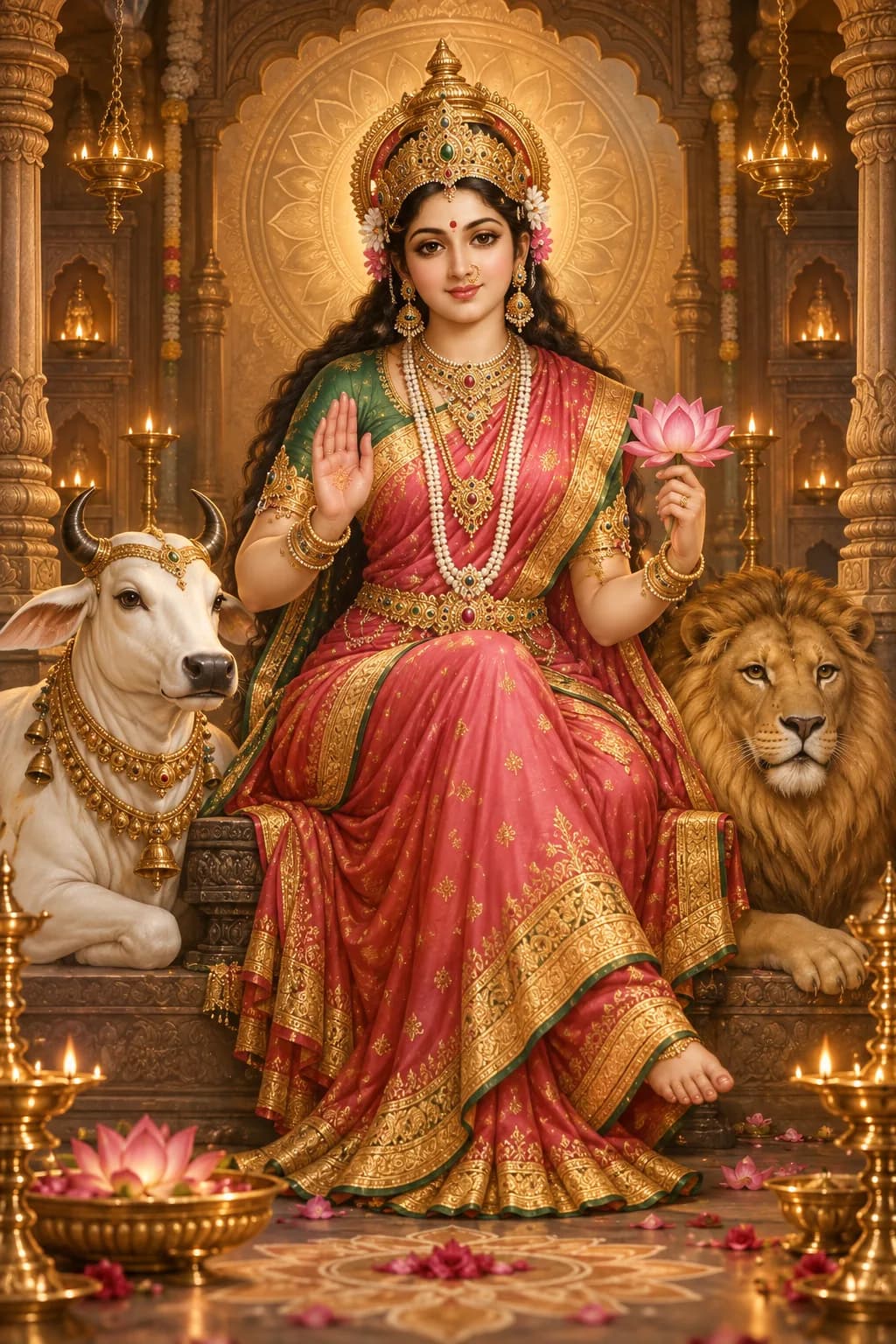
महालक्ष्मी आरती

24

Aarti

ॐ जय लक्ष्मी माता, मैया जय लक्ष्मी माता।

तुमको निसदिन सेवत, हरि विष्णु विधाता॥

उमा, रमा, ब्रम्हाणी, तुम ही जग माता।

सूर्य चंद्रमा ध्यावत, नारद ऋषि गाता॥

दुर्गा रूप निरंजनी, सुख-संपत्ति दाता।

जो कोई तुमको ध्याता, ऋद्धि-सिद्धि धन पाता॥

तुम ही पाताल निवासनी, तुम ही शुभदाता।

कर्म-प्रभाव-प्रकाशनी, भव निधि की त्राता॥

जिस घर तुम रहती हो, ताँहि में हैं सद्‍गुण आता।

सब संभव हो जाता, मन नहीं घबराता॥

तुम बिन यज्ञ ना होता, वस्त्र न कोई पाता।

खान-पान का वैभव, सब तुमसे आता॥

शुभ गुण मंदिर सुंदर, क्षीरोदधि जाता।

रत्न चतुर्दश तुम बिन, कोई नहीं पाता॥

महालक्ष्मी जी की आरती, जो कोई नर गाता।

उर आनंद समाता, पाप उतर जाता॥

ॐ जय लक्ष्मी माता, मैया जय लक्ष्मी माता।

तुमको निसदिन सेवत, हरि विष्णु विधाता॥
Aarti

Om Jai Lakshmi Mata, Maiya Jai Lakshmi Mata ।

Tumako Nishidin Sevat, Hari Vishnu Vidhata ॥

Uma, Rama, Brahmani, Tum Hi Jag Mata ।

Surya Chandrama Dhyavat, Narad Rishi Gata ॥

Durga Roop Niranjani, Sukh-Sampatti Data ।

Jo Koi Tumako Dhyavat, Riddhi-Siddhi Dhan Pata ॥

Tum Hi Patal Nivasini, Tum Hi Shubhdata ।

Karma-Prabhav-Prakashini, Bhavanidhi Ki Trata ॥

Jis Ghar Mein Tum Rahti, Tahin Mein Sadgun Aata ।

Sab Sambhav Ho Jata, Man Nahi Ghabrata ॥

Tum Bin Yagya Na Hote, Vastra Na Koi Pata ।

Khan-Pan Ka Vaibhav, Sab Tumase Aata ॥

Shubh-Gun Mandir Sundar, Kshirodadhi Jata ।

Ratna Chaturdash Tum Bin, Koi Nahi Pata ॥

Mahalakshmi Ji Ki Aarti, Jo Koi Jan Gata ।

Ur Anand Samata, Paap Utar Jata ॥

Om Jai Lakshmi Mata, Maiya Jai Lakshmi Mata ।

Tumako Nishidin Sevat, Hari Vishnu Vidhata ॥

Highlights

"Om Jai Lakshmi Mata" is the most popular aarti of Mahalakshmi, the goddess of wealth and prosperity.

It is sung with special devotion on Diwali, on Fridays, and during daily evening worship.

The aarti describes Lakshmi as Uma, Rama, and Brahmani - the mother of the entire world.

Information

About Lakshmi Aarti

"Om Jai Lakshmi Mata" is an extremely popular aarti sung in praise of Mahalakshmi, the goddess of wealth, prosperity, and good fortune. It is a core part of daily worship in Hindu homes and temples, especially during Diwali.

What does the aarti describe?

The aarti calls Lakshmi Uma, Rama, and Brahmani, describing her as the mother of the world whom the sun and moon meditate upon and whom sage Narada glorifies in song. It describes her as residing in the Ksheer Sagar (ocean of milk), and states that no yagya can be completed without her grace.

Benefits of Lakshmi Aarti

• Singing this aarti is believed to bring wealth and prosperity into the home. • It is said to grant riddhi-siddhi (spiritual and material abundance) and happiness. • It is believed to instill good qualities in the mind and remove anxiety ("Man Nahi Ghabrata"). • According to the aarti, singing it removes sins and fills the heart with joy.

Best Time to Recite

1. Singing it daily during morning and evening worship is considered auspicious. 2. Friday, dedicated to Goddess Lakshmi, is a special day to sing it. 3. It is sung with great grandeur on Diwali and Dhanteras.

How the Aarti is Performed

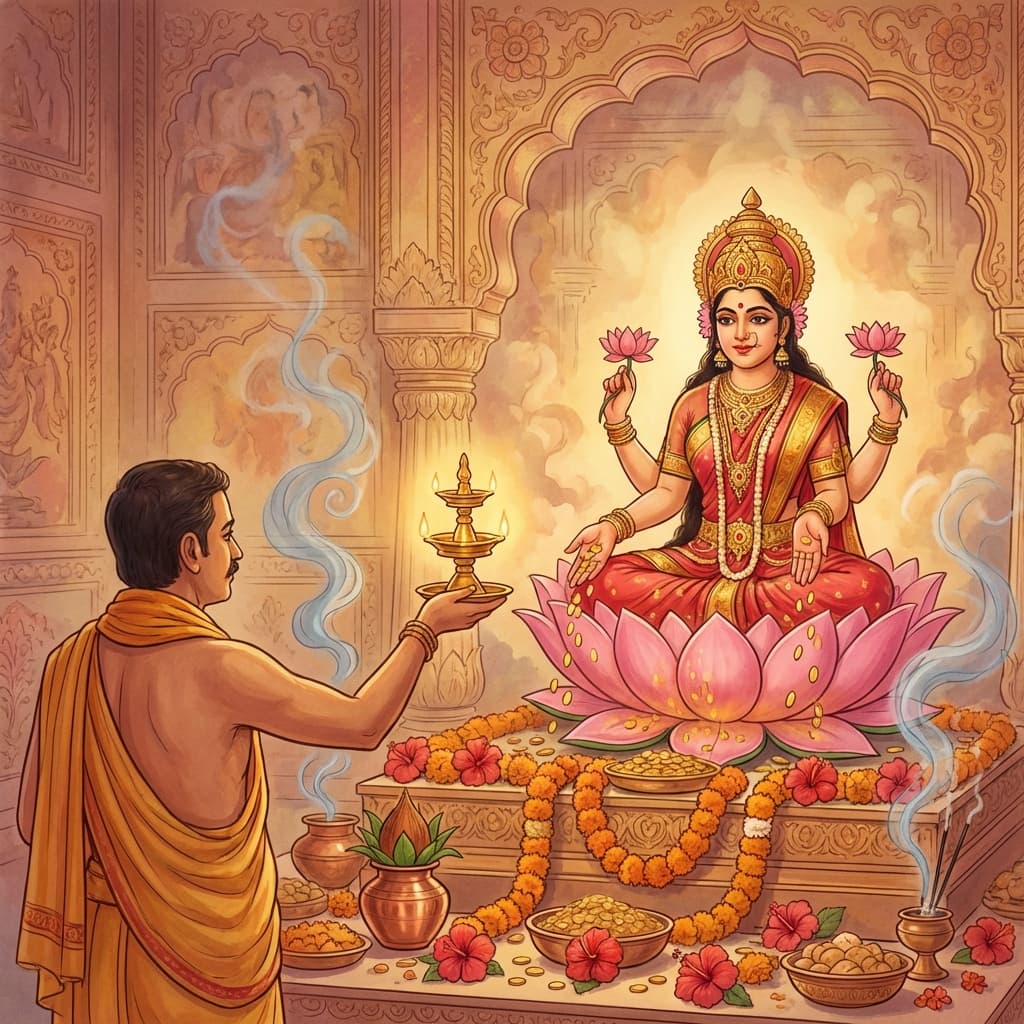
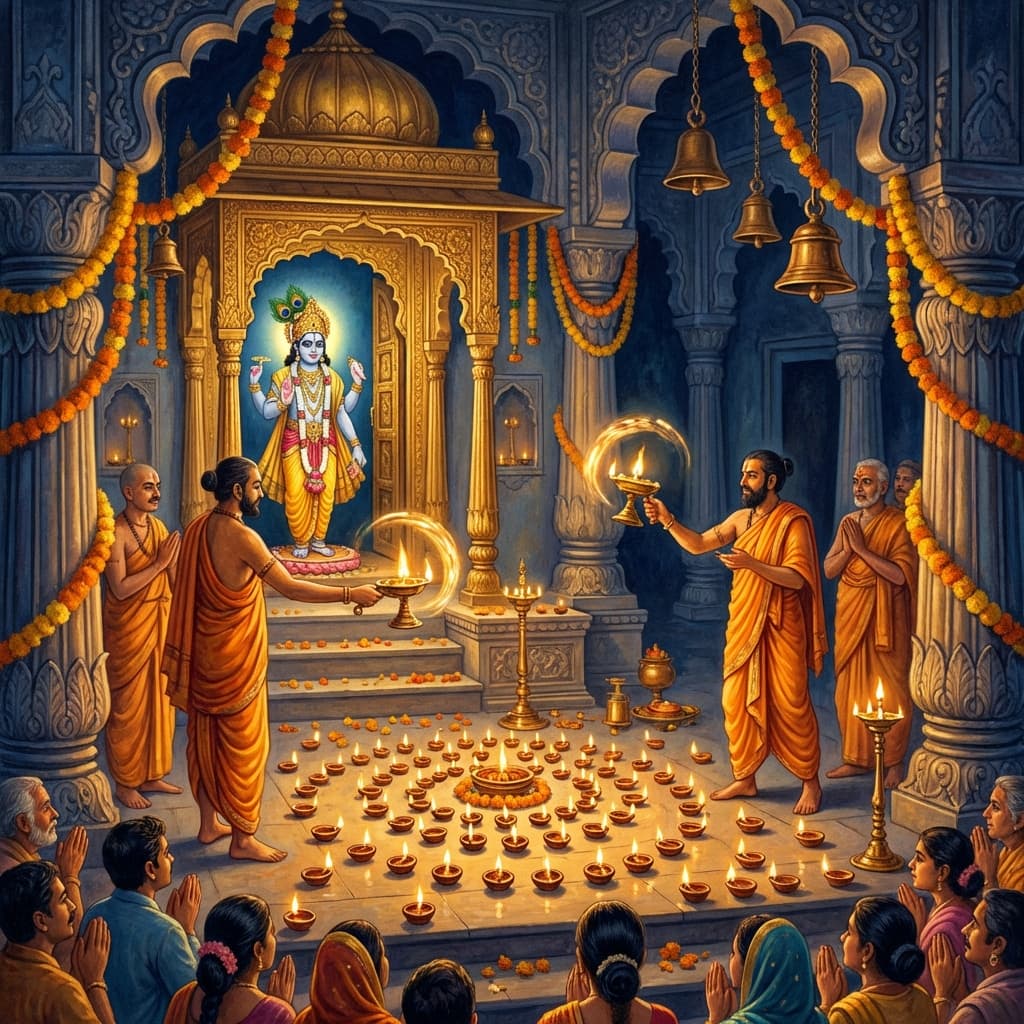
The aarti is sung before an image or idol of Lakshmi, with a lit lamp and offerings of lotus flowers and sweets. Family members stand together to sing, and at the end the plate is circled before the goddess, followed by the distribution of prasad.

Frequently Asked Questions

Who is "Om Jai Lakshmi Mata" sung for?

It is sung in praise of Mahalakshmi, the goddess of wealth, prosperity, and good fortune.

When should this aarti be sung?

It is sung daily during morning and evening worship, on Fridays, and especially on Diwali and Dhanteras.

What does the aarti call Lakshmi?

It calls her Uma, Rama, and Brahmani - the mother of the world, whom even the sun and moon meditate upon.

What are the benefits of singing Lakshmi Aarti?

It is believed to bring wealth and prosperity into the home, grant riddhi-siddhi, and remove anxiety from the mind.

Why does the aarti mention the Ksheer Sagar?

The aarti describes Lakshmi as "Kshirodadhi Jata" - referring to her emergence from the ocean of milk during the churning of the ocean (Samudra Manthan).

What does "Ratna Chaturdash" mean in the aarti?

It refers to the fourteen treasures that emerged from the churning of the ocean, none of which, the aarti says, can be obtained without Lakshmi's grace.

Is this aarti sung only on Diwali?

No, it is part of daily worship, though it is sung with special devotion on Diwali and Fridays.