भगवान शनि की आरती

24

Aarti

जय जय श्री शनिदेव, भक्तन हितकारी।

सूर्य पुत्र प्रभु, छाया महतारी॥

॥ जय जय श्री शनि देव..॥

श्याम अंग वक्र-दृष्टि, चतुर्भुजा धारी।

नीलाम्बर धार नाथ, गज की असवारी॥

॥ जय जय श्री शनि देव..॥

क्रीट मुकुट शीश राजित, दिपत है लिलारी।

मुक्तन की माला गले, शोभित बलिहारी॥

॥ जय जय श्री शनि देव..॥

मोदक मिष्ठान पान, चढ़त हैं सुपारी।

लोहा तिल तेल उड़द, महिषी अति प्यारी॥

॥ जय जय श्री शनि देव..॥

देव दनुज ऋषि मुनि, सुमिरत नर नारी।

विश्वनाथ धरत ध्यान, शरण हैं तुम्हारी॥

॥ जय जय श्री शनि देव भक्तन हितकारी॥
Aarti

Jai Jai Shri Shani Dev, Bhaktan Hitkari ।

Surya Putra Prabhu, Chhaya Mehtari ॥

॥ Jai Jai Shri Shani Dev..॥

Shyam Ang Vakra-Drishti, Chaturbhuj Dhari ।

Neelambar Dhar Nath, Gaj Ki Aswari ॥

॥ Jai Jai Shri Shani Dev..॥

Kirit Mukut Sheesh Rajit, Dipat Hai Lilari ।

Muktan Ki Mala Gale, Shobhit Balihari ॥

॥ Jai Jai Shri Shani Dev..॥

Modak Mishtan Paan, Chadhat Hain Supari ।

Loha Til Tel Urad, Mahishi Ati Pyari ॥

॥ Jai Jai Shri Shani Dev..॥

Dev Danuj Rishi Muni, Sumirat Nar Nari ।

Vishwanath Dharat Dhyan, Sharan Hain Tumhari ॥

॥ Jai Jai Shri Shani Dev Bhaktan Hitkari ॥

Highlights

"Jai Jai Shri Shani Dev" is the principal aarti of Shani Dev, the deity of justice and karma, described as the son of Surya and Chhaya.

It is sung with special devotion on Saturdays and on Shani Jayanti.

The aarti describes Shani Dev as blue-robed, four-armed, and pleased by offerings of sesame, oil, and urad dal.

Information

About Shani Aarti

"Jai Jai Shri Shani Dev" is a principal aarti sung in praise of Shani Dev, the deity of justice and the fruits of karma. It describes him as the son of Surya (the sun) and Chhaya, portrayed as benevolent and compassionate toward his devotees.

What does the aarti describe?

The aarti describes Shani Dev as dark-complexioned, four-armed, dressed in blue robes, and riding an elephant. It says he is especially fond of offerings of modak, sweets, betel leaf and areca nut, as well as sesame seeds, oil, and urad dal - traditionally offered to him.

Benefits of Shani Aarti

• Singing this aarti is believed to bring relief during unfavorable periods of Shani, including Sade Sati. • It is sung to seek the grace of Shani Dev, the just deliverer of the fruits of one's actions. • It is believed to bring discipline, patience, and the strength for right decisions. • It is sung with a spirit of seeking refuge and protection from hardship.

Best Time to Recite

1. Saturday, dedicated to Shani Dev, is the most auspicious day to sing this aarti. 2. It is sung with grandeur on the occasion of Shani Jayanti. 3. Those affected by Sade Sati or Dhaiya (Shani's transit periods) recite it regularly.

How the Aarti is Performed

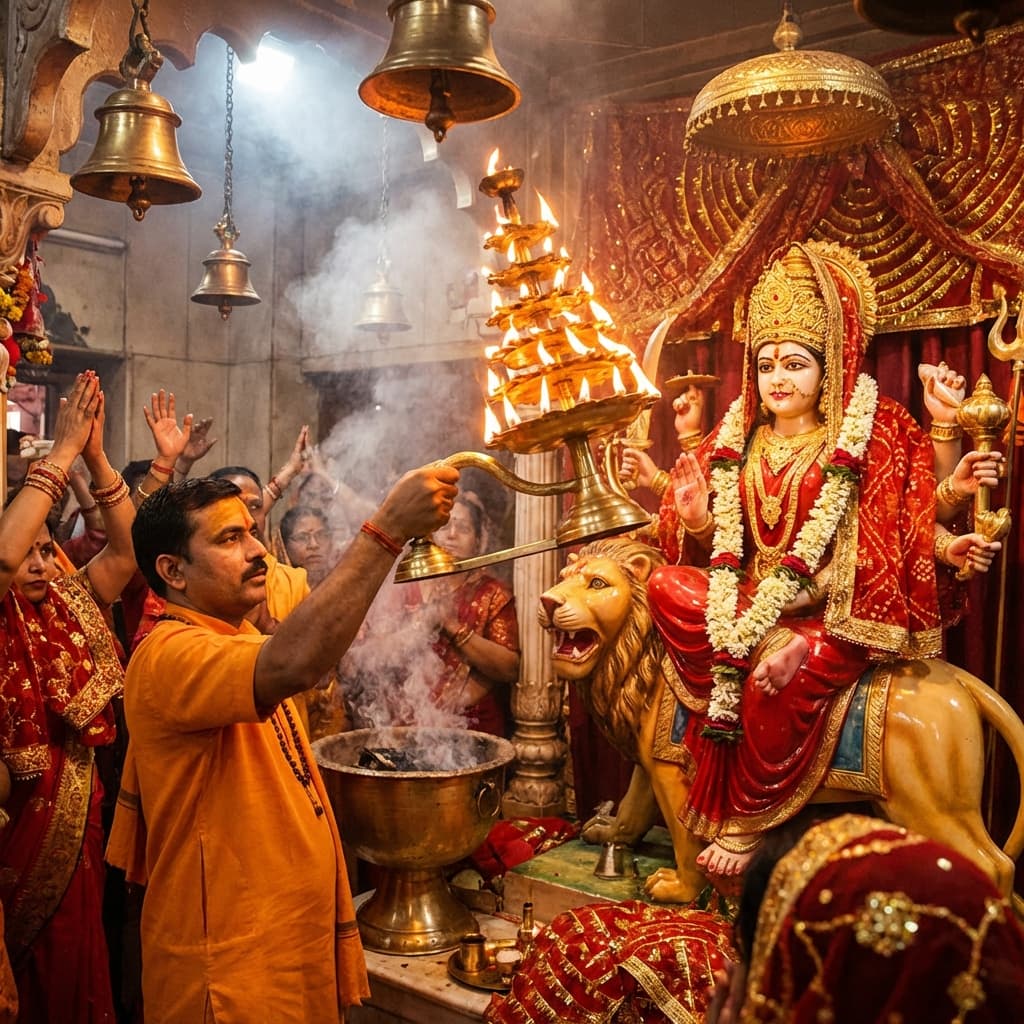
The aarti is sung before an image or idol of Shani Dev, lighting a mustard-oil lamp and offering black sesame seeds and urad dal. On Saturdays, devotees often gather at Shani temples specifically to sing this aarti together.

Frequently Asked Questions

Who is "Jai Jai Shri Shani Dev" sung for?

It is sung in praise of Shani Dev, the deity of justice and karma, described as the son of Surya and Chhaya.

When should this aarti be sung?

It is sung especially on Saturdays, on Shani Jayanti, and during periods of Sade Sati or Dhaiya.

How does the aarti describe Shani Dev?

It describes him as dark-complexioned, four-armed, dressed in blue robes, and riding an elephant.

Which offerings does Shani Dev especially favor?

According to the aarti, he especially favors modak, sweets, betel leaf, and areca nut, along with sesame seeds, oil, and urad dal.

What are the benefits of singing Shani Aarti?

It is believed to bring relief during unfavorable periods of Shani and to instill patience and discipline in life.

What is the significance of this aarti during Sade Sati?

Those affected by Shani's Sade Sati or Dhaiya regularly sing this aarti to seek his grace and relief from hardship.

Can this aarti only be sung on Saturdays?

Saturday is considered the most auspicious day for it, but devotees may sing it with devotion on any day.