
How to Start Reading the Bhagavad Gita: A Daily Guide for Beginners
Begin reading the Bhagavad Gita without feeling overwhelmed by its 700 verses. Learn how to choose a translation, reflect on the meaning, and build a steady daily practice.
Begin with the Right Approach
The Bhagavad Gita is not merely a battlefield dialogue or a religious book to finish. It is a conversation between Arjuna, who is overwhelmed by doubt, and Krishna, who helps him see with clarity. Read it with your own questions: What is my responsibility? How can I guide the mind? How can I act fully without losing inner steadiness?
Do not pressure yourself to complete all 18 chapters quickly. One or two verses with their meaning are enough for a day. Gita study deepens through reflection rather than speed; staying with one verse for several days can itself be a meaningful practice.
Choose a Trustworthy Translation and a Simple Order
Choose an edition that includes the original Sanskrit verse, word meanings, a clear translation in a language you know well, and concise commentary. If you belong to a particular lineage or study with a teacher, give priority to their recommended commentary. Otherwise, comparing two respected translations can clarify difficult passages.
First-time readers can move from Chapter 1 onward to follow the flow from Arjuna's crisis to Krishna's teaching. If that feels difficult, begin with an overview of Chapter 2, Chapter 12 on Bhakti Yoga, and Chapter 14 on the three gunas, then return to a sequential reading. A short introduction before each chapter will help preserve context.
A 15-Minute Daily Gita Routine
Choose a clean, quiet place. Spend the first minute settling with natural breaths and bow mentally to Krishna or your chosen deity. For the next five minutes, read one or two verses slowly. Listen to a reliable Sanskrit recitation when helpful, but do not let anxiety about perfect pronunciation stop your study.
Use the next six minutes for the translation and commentary. Then close the book and ask in your own words: What is this verse teaching, and where could it guide me today? During the final three minutes, write one sentence in a journal and choose one small practice—focusing on the work instead of its reward, for example, or pausing before reacting.
Bring the Teaching into Daily Life
Gita study becomes alive when it appears in conduct. Do not leave Karma Yoga as a theory: give your best to study, work, household duties, and service while noticing the anxiety to control every result. Do not confine Bhakti Yoga to ritual: gentler speech and less ego in relationships are also forms of devotion.
At the end of each week, reread your journal lines. Notice which teaching helped during a decision, anger, fear, or laziness. The aim is not harsh self-judgment but gradual awareness. When a verse remains confusing, seek help from a knowledgeable acharya, teacher, or trustworthy commentary.
Choose Consistency over Perfection
Choose a regular time—after morning prayer, before a commute, or before sleep. If daily reading is unrealistic, set three days each week. When you miss a day, continue the next day instead of abandoning the practice through guilt. A small sustainable routine is more useful than occasional long sessions.
After each chapter, write a three-sentence summary and add one example from life. Do not expect to understand everything after completing all 18 chapters once. The Gita reveals new meaning during different seasons of life; each rereading can show the seeker another aspect of their own mind.
Frequently asked questions
Questions devotees often ask
Which chapter of the Bhagavad Gita should a beginner read first?
Reading sequentially from Chapter 1 preserves the full flow of the dialogue. If the opening feels difficult, read an overview of Chapter 2 and then Chapter 12 before returning to Chapter 1.
How many Gita verses should I read each day?
One or two verses with their meaning are enough at first. Understanding, reflecting, and applying one small teaching matters more than increasing the count.
Must the Bhagavad Gita be read only in Sanskrit?
Seeing and hearing the Sanskrit is valuable, but a trustworthy translation in a language you understand is appropriate for learning the teaching. An edition containing both can make study richer.
Puja Guide
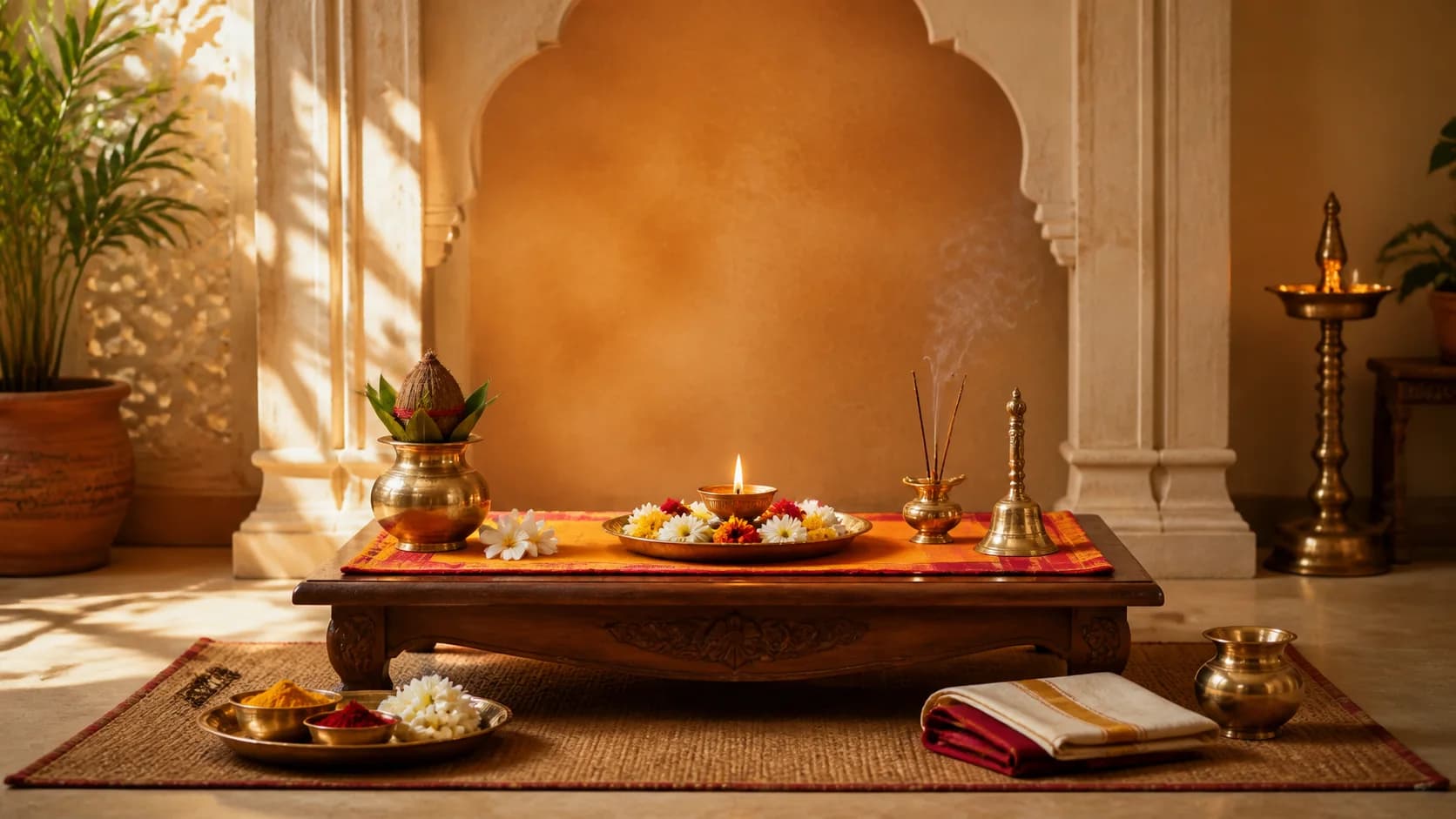
How to Do Puja at Home: A Simple Guide for Beginners
Starting a daily puja at home does not need to feel complicated. Learn a simple sequence from preparing the space to diya, mantra, aarti, and prasad.
Daily Practice
A Simple Hindu Morning Prayer Routine in 10 Minutes
Begin the day with a practical 10-minute devotional routine combining a mindful pause, diya, naam jaap, a short prayer, intention, and gratitude.