
How to Do Puja at Home: A Simple Guide for Beginners
Starting a daily puja at home does not need to feel complicated. Learn a simple sequence from preparing the space to diya, mantra, aarti, and prasad.
Begin with Intention and a Clean Space
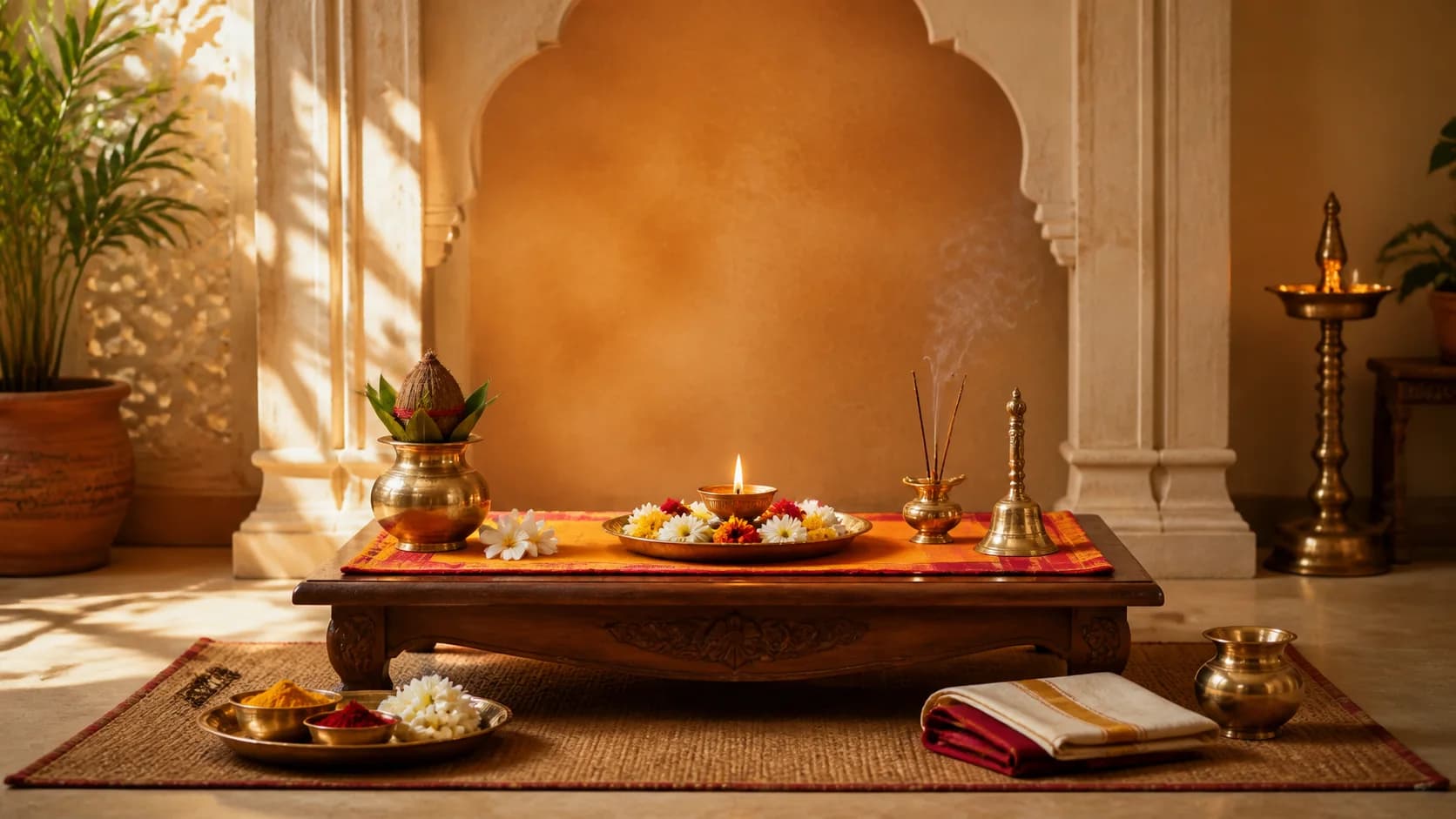
The heart of puja is remembrance, gratitude, and loving attention toward the Divine. You do not need a large altar or many objects; a clean place and a calm intention are enough. Choose a tidy, ventilated, relatively quiet corner and place a small chowki or altar there.
Keep your chosen deity's image or murti respectfully positioned and the area free from clutter. Facing east or north is customary, but do not abandon the practice if your home layout makes that difficult—sincerity and consistency matter more than anxiety about rules.
Essential Items for a Simple Home Puja
To begin, a diya, cotton wick, ghee or oil, a small vessel of water, flowers, incense, and a little prasad are enough. You may add a bell, sandalwood paste, roli, akshat, and a puja thali when available, but their absence does not make sincere worship incomplete.
Offer only clean, fresh items. Avoid plastic decoration and excessive smoke, especially in small rooms or homes with children, older adults, or pets. Place the diya on a stable, fire-safe surface and never leave a flame unattended.
A Simple Step-by-Step Puja Sequence
After bathing—or simply washing your hands and face—wear clean clothes. Sit before the altar, take three slow breaths, set a quiet intention, and light the diya. Offer water, sandalwood paste or roli, akshat, and flowers. Saying your deity's name with each offering is itself a sufficient mantra.
Then repeat the divine name 11 times, chant a short mantra, or read a chalisa or stuti according to the time available. Conclude with aarti, speak a personal prayer, ask forgiveness for mistakes, and receive prasad. Even five to ten attentive minutes can form a meaningful daily puja.
Choosing a Mantra, Chalisa, or Aarti
Begin with the simple name of the deity toward whom you naturally feel drawn—for example, “Ram,” “Om Namah Shivaya,” or “Om Namo Bhagavate Vasudevaya.” Aim for clear pronunciation, but do not become afraid of small mistakes. Understanding the meaning and practicing steadily are more useful than perfectionism.
You may read Hanuman Chalisa on Tuesday, a Shiva stuti on Monday, or your chosen deity's aarti each day. Instead of constantly changing the sequence, follow one short practice for a few weeks so worship can become a natural part of daily life.
Common Mistakes and Gentle Solutions
Starting with an overly long ritual, skipping puja when an item is unavailable, and fearing small pronunciation mistakes are common obstacles. Make the practice smaller instead: a diya, a flower, 11 repetitions of the divine name, and one heartfelt prayer can be complete in spirit.
Do not make puja only a transaction for fulfilling wishes. Give gratitude, self-reflection, and ethical conduct a place in your practice. If your family tradition or guru teaches a specific method, honor it; this guide offers a general daily practice and does not replace lineage-specific guidance.
Frequently asked questions
Questions devotees often ask
Can I do puja at home without bathing?
Bathe when practical, but during illness, travel, or time constraints, you may wash your hands and face, become presentable, and worship sincerely.
How long should daily home puja take?
There is no compulsory duration. Five to ten consistent, attentive minutes may be more sustainable than an occasional long ritual.
Which diya should I light for puja?
A brass or clay diya with ghee or clean oil is common. Follow your family tradition and always prioritize fire safety.
Ganesh Devotion
Ganesh Chaturthi 2026: Puja Vidhi, Significance, Ganeshotsav, and Visarjan
Learn the verified Ganesh Chaturthi 2026 date, the meaning of Madhyahna puja, Ganapati Sthapana at home, daily worship, modak and durva significance, and a respectful visarjan practice.

Gita Wisdom
How to Start Reading the Bhagavad Gita: A Daily Guide for Beginners
Begin reading the Bhagavad Gita without feeling overwhelmed by its 700 verses. Learn how to choose a translation, reflect on the meaning, and build a steady daily practice.