Navratri Vrat 2026: Fasting Foods, Meal Ideas, and a Gentle Routine
Explore common Navratri fasting approaches, familiar vrat-food options, and a gentle routine that respects devotion, health, and family tradition.
The spirit of a Navratri vrat
A Navratri vrat is not simply a rule about skipping food. It can be a time for restraint, prayer, and attention to one’s conduct. Customs differ by family and region: some devotees fast for all nine days, some on the first and last days, while others choose sattvic meals or a devotional practice. No single approach should be treated as mandatory for everyone.
Sharad Navratri 2026 begins on October 11. Before starting, learn your family’s custom and choose a sankalp you can observe with devotion and ease.
What is commonly eaten during vrat?
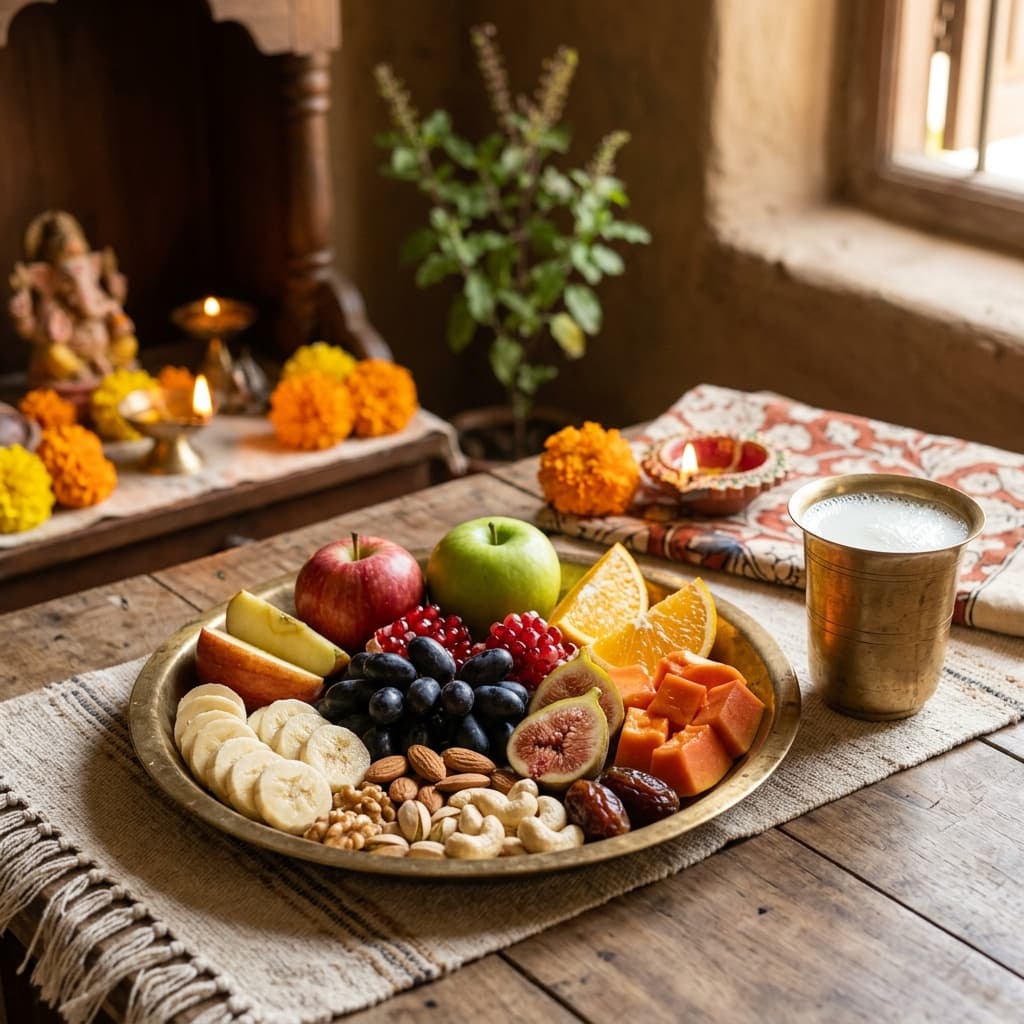
Many households use fruit, milk, yogurt, nuts, and selected flours or grains such as kuttu (buckwheat) and singhara (water chestnut). Sabudana, makhana, and potatoes are also familiar in many homes. Sendha namak is used in some vrat traditions. What is permitted and how it is prepared varies, so follow your household custom.
A simple day might include fruit or yogurt, a home-cooked light meal, and regular water breaks. There is no need to make deep-fried or very sweet dishes the centre of the observance. If your tradition has a different food list, follow that.
Keep the daily routine simple
After bathing, begin with puja or a few minutes of mantra recitation. Plan meal times, balance activity with rest, and set aside a little time for a hymn, story, or bhajan dedicated to Devi. The aim is to steady the mind in devotion; severe rules are not required.
If work, travel, or family duties make a long routine difficult, keep it small: a lamp, a prayer, and a mindful meal can still be meaningful. If you cannot keep a vow, return calmly to prayer and make your next choice without dwelling in guilt.
Make room for health and personal needs
Shape a vrat around your age, health, and circumstances. If you are pregnant, have diabetes, take regular medication, have a food-related condition, or have another health concern, ask a clinician before fasting or changing your usual meals. Do not pressure children or older adults into strict fasting.
Devotion is not measured by how much discomfort you endure. If a food fast is not right for you, sattvic meals, service, giving, mantra recitation, or a resolve to avoid anger and harsh speech can also give Navratri meaning.
Frequently asked questions
Questions devotees often ask
Is it necessary to fast for all nine days?
No. The length and form of a vrat vary by family, region, health, and personal sankalp.
Can I eat kuttu or sabudana during vrat?
Many households include them, but rules differ by tradition. Follow your household custom.

Devi Worship
Sharad Navratri 2026: Ghatasthapana, Nine Days of Puja, Colors, and Sadhana
Understand Sharad Navratri 2026 dates, the meaning of Ghatasthapana, worship of the nine forms of Durga, fasting observances, Kanya Puja, and the journey toward Vijayadashami.
Devi Worship
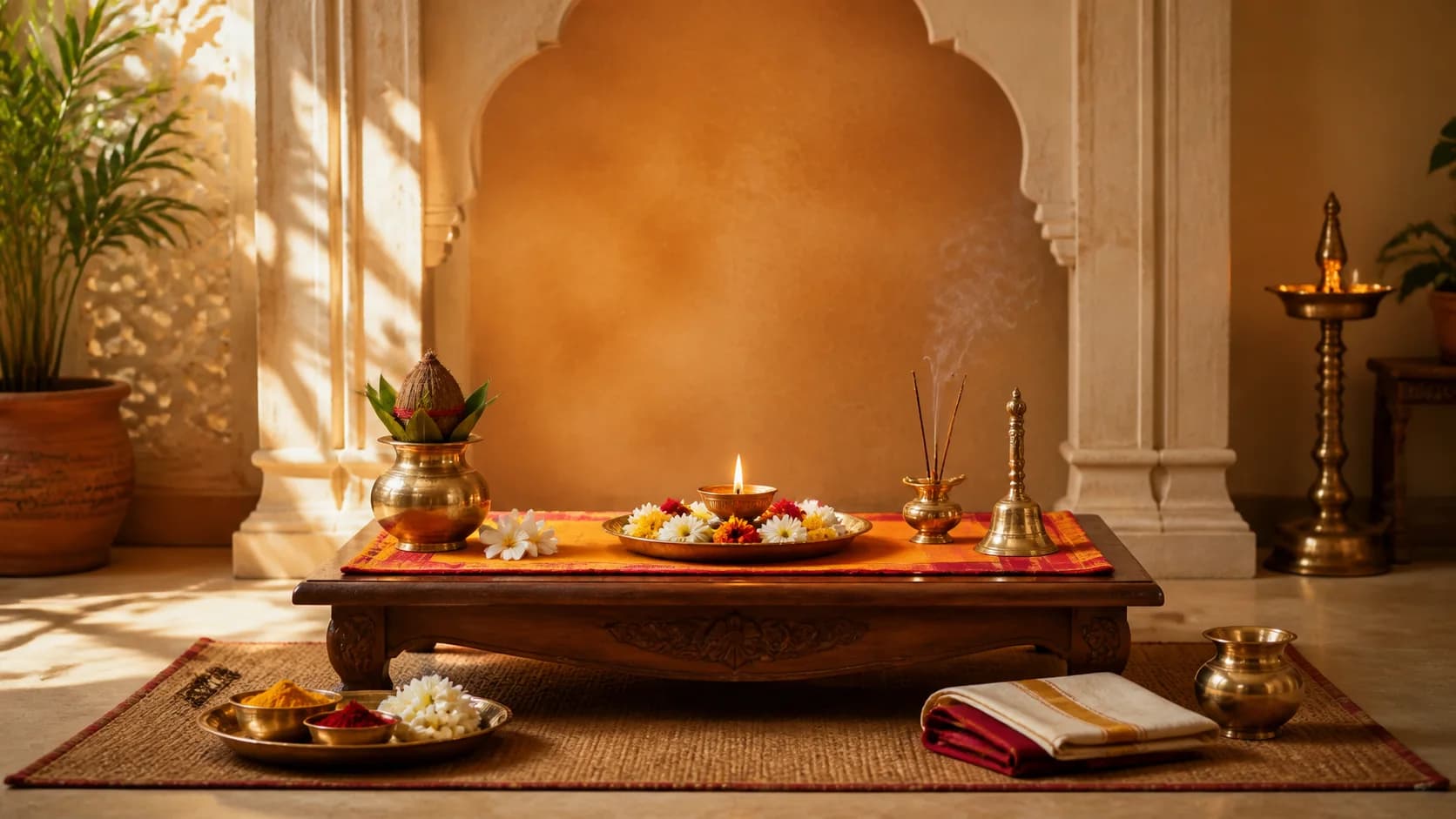
Daily Navratri Puja at Home: A Simple 15-Minute Routine
A clear, adaptable home puja routine for Navratri, with a sankalp, lamp, prayer, mantra, and a calm close that fits a busy day.