गणेशजी मराठी आरती

24

Aarti

सुखकर्ता दुखहर्ता वार्ता विघ्नाची।

नुरवी पूर्वी प्रेम कृपा जयाची॥

॥ सुखकर्ता दुखहर्ता..॥

सर्वांगी सुंदर उटी शेंदुराची।

कंठी झळके माळ मुक्ताफळांची॥

॥ सुखकर्ता दुखहर्ता..॥

जय देव जय देव जय मंगलमूर्ती।

दर्शनमात्रे मनकामना पूर्ती॥

॥ जय देव जय देव..॥

रत्नखचित फरा तुज गौरीकुमरा।

चंदनाची उटी कुमकुम केशरा॥

॥ जय देव जय देव..॥

हिरेजडित मुकुट शोभतो बरा।

रुणझुणती नूपुरे चरणी घागऱ्या॥

॥ जय देव जय देव..॥

लंबोदर पीतांबर फणिवरबंधना।

सरळ सोंड वक्रतुंड त्रिनयना॥

॥ जय देव जय देव..॥

दास रामाचा वाट पाहे सदना।

संकटी पावावे निर्वाणी रक्षावे सुरवरा॥

॥ जय देव जय देव..॥
Aarti

Sukhakarta Dukhharta Varta Vighnachi.

Nuravi Purvi Prema Krupa Jayachi.

|| Sukhakarta Dukhharta..||

Sarvangi Sundar Uti Shendurachi.

Kanthi Jhalake Mal Muktaphalaanchi.

|| Sukhakarta Dukhharta..||

Jai Dev Jai Dev Jai Mangalamurti.

Darshanmatre Manakamana Purti.

|| Jai Dev Jai Dev..||

Ratnakhachit Phara Tuj Gauri Kumara.

Chandanachi Uti Kumkum Keshara.

|| Jai Dev Jai Dev..||

Hirejadit Mukut Shobhato Bara.

Runjhunati Nupure Charani Ghagarya.

|| Jai Dev Jai Dev..||

Lambodar Pitambar Phanivarbandhana.

Saral Sond Vakratunda Trinayana.

|| Jai Dev Jai Dev..||

Das Ramacha Vat Pahe Sadana.

Sankati Pavave Nirvani Rakshave Survara.

|| Jai Dev Jai Dev..||

Highlights

"Sukhakarta Dukhharta" is a famous Marathi aarti of Lord Ganesha, describing him as the giver of happiness, remover of sorrow, and remover of obstacles.

It is sung in nearly every home and pandal in Maharashtra during Ganesh Chaturthi and Ganeshotsav.

The aarti describes Ganesha as Gaurikumara (son of Parvati), Vakratunda, and Lambodar.

Information

About Sukhakarta Dukhharta

"Sukhakarta Dukhharta" is an immensely popular Marathi-language aarti of Lord Ganesha, traditionally attributed to Sant Ramdas. It is different from the Hindi "Jai Ganesh Jai Ganesh Deva" aarti but is sung with equal devotion in praise of Ganesha. In Maharashtra and neighboring regions, it is an integral part of almost every puja.

What does the aarti describe?

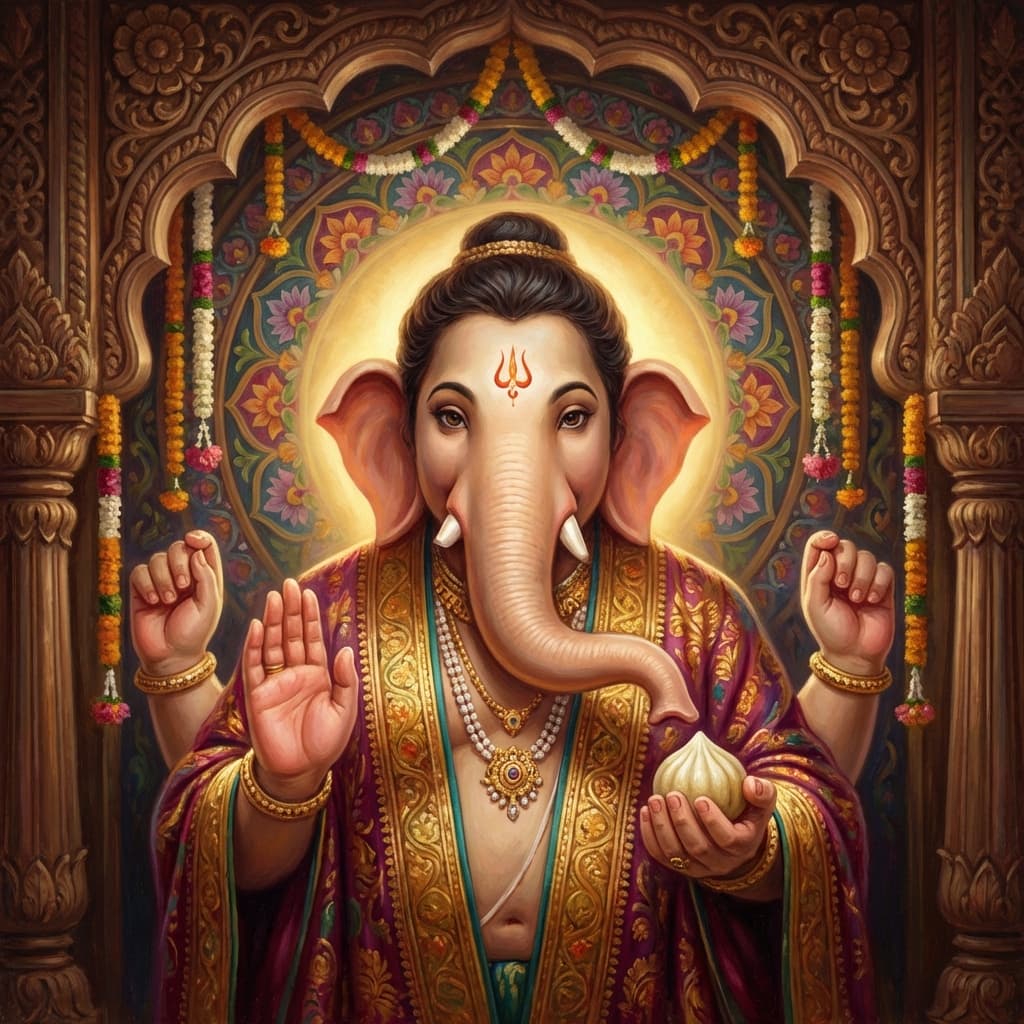
The aarti calls Ganesha "Sukhakarta Dukhharta Varta Vighnachi" - the giver of happiness, remover of sorrow, and one who ends even the mention of obstacles. He is described as adorned with vermilion (sindoor), wearing a garland of pearls, a jewel-studded crown, and as the son of Gauri (Parvati).

Benefits of Sukhakarta Dukhharta

• Singing this aarti is believed to remove obstacles and hardships from life. • It is considered especially fruitful for the fulfillment of wishes ("Darshanmatre Manakamana Purti" - wishes fulfilled through mere darshan). • It is thought to bring an atmosphere of auspiciousness and prosperity to the home. • It is said to provide protection and inner strength during difficult times.

Best Time to Recite

1. Singing it daily during morning and evening worship is considered auspicious. 2. It is sung in nearly every home and public pandal throughout the ten-day Ganeshotsav and on Ganesh Chaturthi. 3. Wednesday, being dedicated to Lord Ganesha, is also a special day to recite it.

How the Aarti is Performed

The aarti is sung before Ganesha's idol with a lit lamp and bell, traditionally repeating "Jai Dev Jai Dev Jai Mangalamurti" after each verse. It concludes with an offering of modaks and laddoos, distributed afterward as prasad.

Frequently Asked Questions

Who is Sukhakarta Dukhharta an aarti for?

It is a famous Marathi-language aarti of Lord Ganesha, traditionally attributed to Sant Ramdas.

When should this aarti be sung?

It is sung daily during morning and evening worship, on Wednesdays, and especially throughout Ganesh Chaturthi and Ganeshotsav.

Is Sukhakarta Dukhharta the same as "Jai Ganesh Deva"?

No, they are two different compositions - one in Marathi and the other in Hindi-Braj Bhasha - but both glorify Lord Ganesha.

How does the aarti describe Ganesha?

It describes him as "Gaurikumara" (son of Parvati), "Lambodar," "Vakratunda," and adorned with vermilion and a jewel-studded crown.

What are the benefits of singing this aarti?

It is believed to remove obstacles from life, and the aarti itself says "Darshanmatre Manakamana Purti" - that wishes are fulfilled through mere darshan of Ganesha.

What is the significance of this aarti during Ganeshotsav?

During Maharashtra's Ganeshotsav, it is sung daily in nearly every home and public pandal and has become a defining part of the festival.

What does "Jai Dev Jai Dev" mean in the aarti?

This refrain glorifies Ganesha as "Mangalamurti" (the auspicious one) and is traditionally repeated at the end of each verse.