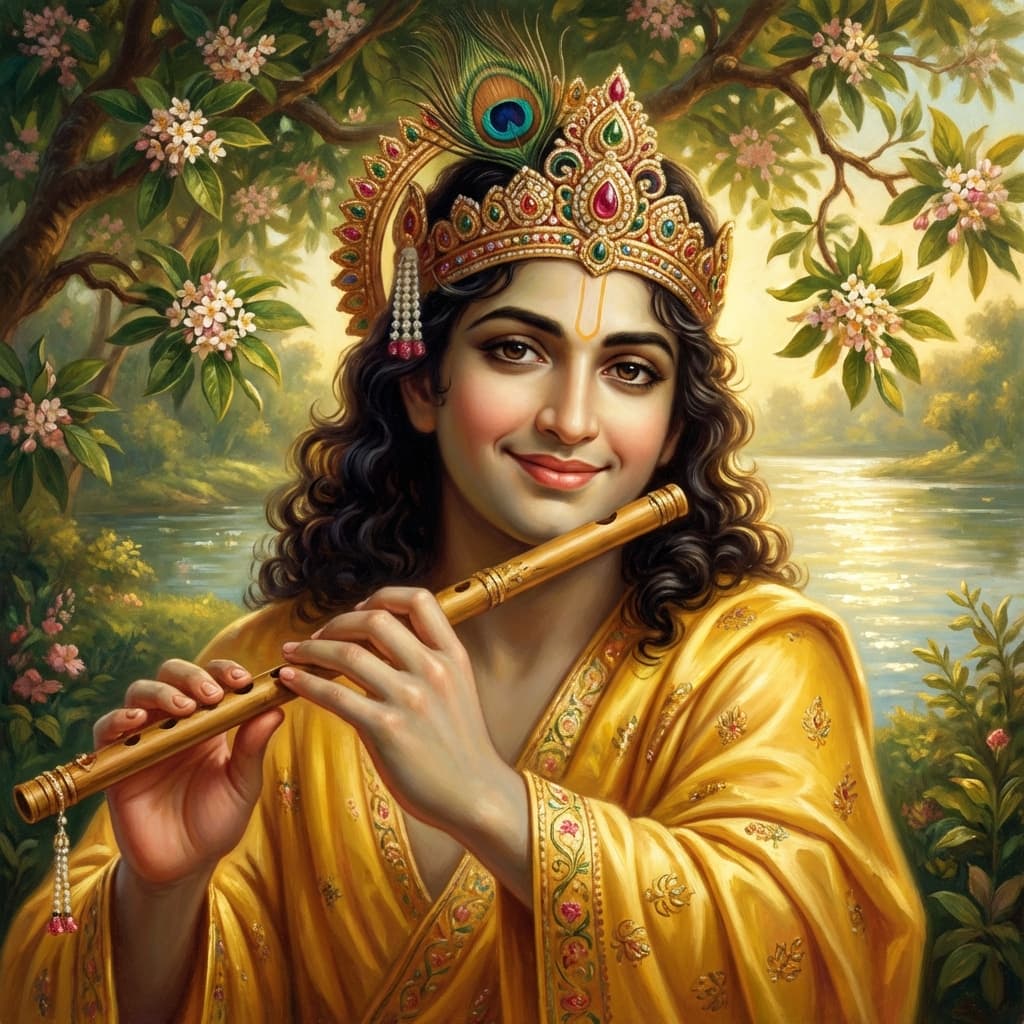
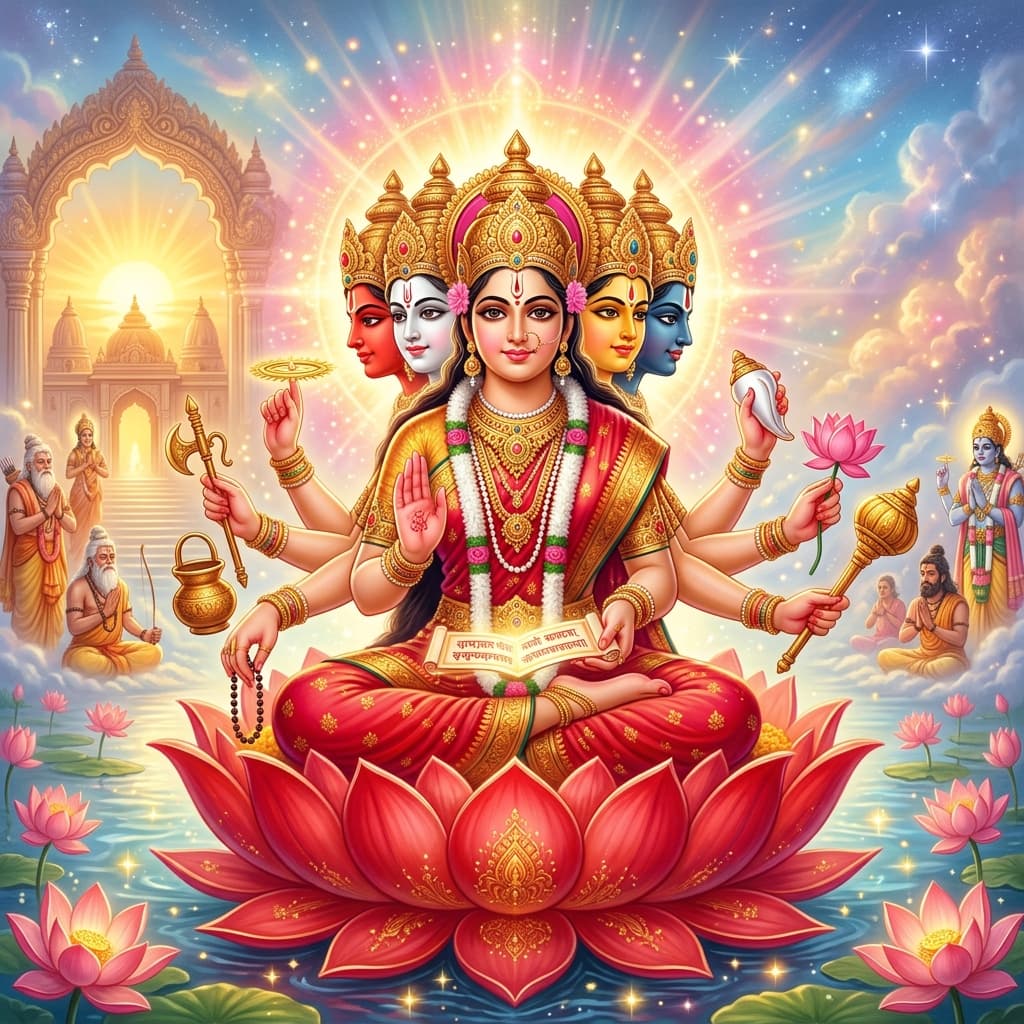
Lord Krishna, the eighth avatar of Vishnu and one of the most revered deities in Hinduism, has a life filled with the ideals of leela, love, and dharma. Born in Mathura, Krishna displayed wonderful miraculous leelas from his childhood. Events like the slaying of Putana, victory over Kaliya Nag, and lifting the Govardhan mountain reveal his divine form. His childhood in Vrindavan and Gokul was full of devotion, affection, and joy.
Krishna's sweet flute sound is still considered a symbol of love and devotion. His Raslila with the gopis of Gokul, in which Radha-Krishna's divine love presents the supreme ideal of devotion and self-surrender. Krishna's relationship with Radha is not just worldly love but an indicator of the union of soul and Supreme Soul.
In youth, Krishna went to Mathura and killed the tyrant Kansa, establishing dharma. Making Dwarka his capital, he conducted the kingdom and presented the ideal of peace, policy, and dharma. In the Mahabharata, he explained the ultimate truth of life to Arjuna through the teachings of the Gita—attaining liberation through the path of karma, dharma, and devotion.
Krishna's character is full of contradictions—he is mischievous as a child, beloved of gopis, yet also a great strategist on the battlefield and a profound philosopher. His life teaches us that balance of love, policy, and dharma is necessary in worldly life.
Janmashtami, Krishna's main festival, is celebrated on Krishna Ashtami of Bhadrapada month. On this day, devotees observe fasts, kirtan, and night vigil. Vrindavan, Mathura, and Dwarka are still the most prominent centers of Krishna devotion. His teachings and leelas still awaken love and reverence in the hearts of millions of devotees worldwide.
When does Janmashtami come and what are the main traditions for celebrating it?
Janmashtami is celebrated on Bhadrapada Shukla Ashtami (usually August/September). On this day, special worship, kirtan, fasting, and night vigil are performed at night because according to tradition, Krishna's incarnation occurred at midnight. Temples have displays, dramas of Krishna-leela, butter-stealing games, and swing festivals. Devotees listen to bhajan, Gita recitation, and the birth narrative of Shri Krishna at the time of 'Ashtami' at night.
What is the spiritual meaning of Krishna's Raslila?
Raslila is not just dance; it is a symbol of the sweet union of soul (jiva) and Supreme Soul (Krishna). Krishna's 'Ras' with gopis presents the ideal of selfless love and complete surrender, where the soul merges into Krishna and experiences bliss. In Gaudiya Vaishnava and other Vaishnava traditions, it is considered the ultimate definition of 'bhakti-rasa.'
What is the message of the story of Krishna lifting Govardhan mountain?
In the story of lifting Govardhan, Krishna saved his village from Indra's displeasure and blind faith—this shows that true devotion and service with dharma are above external deities/others' aspirations. It also teaches the lesson of anti-arrogance, protection, and the importance of village life: true devotion is for the welfare of society and tradition.
What is Krishna's contribution in Bhagavad Gita and why is it read?
Bhagavad Gita is Krishna's teaching given in the context of Mahabharata—it presents mixed, well-structured guidance on the paths of karma, devotion, knowledge, dharma, and liberation. Practical answers to life's philosophical and ethical questions are found in it—why should one perform karma, how to perform karma detached, and how to attain self-knowledge. Therefore, this text is widely read not only for religious but also for philosophical and ethical teachings.
What is the symbolic meaning of Krishna's flute?
Krishna's flute is a symbol of infinite love and spiritual attraction—devotees' hearts merge in that tune. Hearing the flute produces renunciation of attachment and memory filled with love, which brings the soul closer to Krishna. The flute's sound gives the experience of 'ananda-rasa' and unbroken love.
How should Krishna's leelas be taught to children?
At the child level, leelas should be told as simple, dramatic, and moral stories—such as butter stealing, victory over Kaliya Nag, protector of cows, etc. Add a moral lesson (courage, truth, compassion, dharma) with each story so children learn values along with the fun of the story. These leelas become more effective through music, pictures, and drama.
What are the common methods of Krishna worship (home practice)?
Install an idol/picture at home, perform bhajan/kirtan morning-evening, read flute songs and verses of Gita. Organize small events on Janmashtami—night vigil, aarti, offer fruits-prasad. Chanting 'Hare Krishna' mantra and true devotion are most important. Also, charity and service (service attitude) are part of Krishna devotion.
What is the essence of the spiritual relationship between Krishna and Radha?
In Radha-centered traditions, Radha is considered Krishna's spiritual love (ananda-rasika affection)—Radha is one without whom Krishna's leelas are considered incomplete. Their relationship demonstrates self-surrender, selfless love, and that incomparable attachment towards the Supreme Soul which is the highest state of a devotee.
Which form of Krishna's worship is considered suitable for which situation/goal?
Krishna has many forms—Balakrishna (mischievous, butter-loving) worshipped for love-affection; Radha-Krishna (for devotion-respect); Yogeshwar/Supreme Soul form (for spiritual sadhana); Rajasuya or wartime form (for policy/duty). When choosing a worship form, see the individual devotee's inclination and spiritual goal.
What is the modern social impact of Krishna devotion?
Krishna devotion has had a great impact on music, literature, dance, and social consciousness—such as bhakti sadhana has promoted sensitivity, charity, and community resources in society. Temples and festivals have maintained cultural identity and provided opportunities for community gatherings.
Are Krishna's stories historical or symbolic?
Stories have both dimensions—many people consider them as historical and mythological events, while many scholars and devotees see them as symbolic and philosophical metaphors. Ultra-modern studies and archaeological discoveries give different conclusions on this subject; but from a religious-faith perspective, leelas convey the message of religious and moral truth, no matter how defined they are historically.