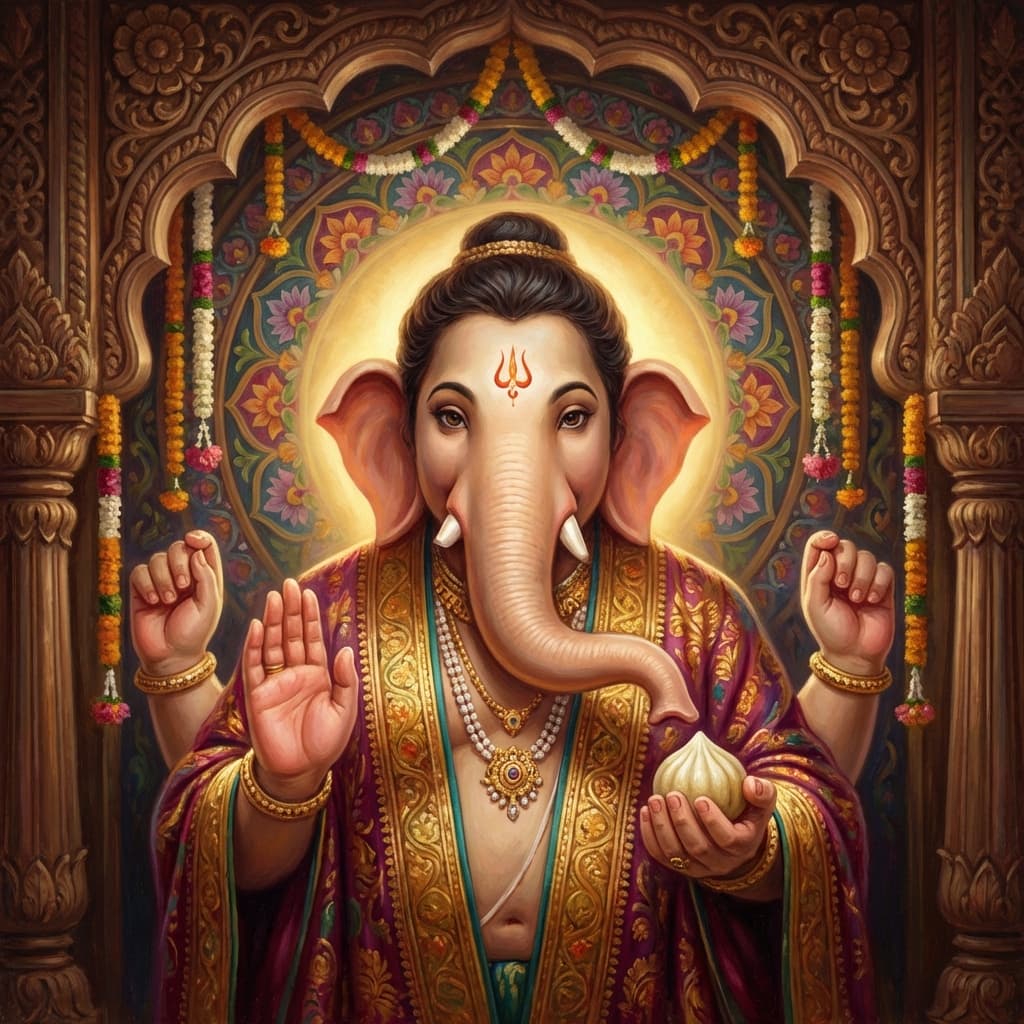
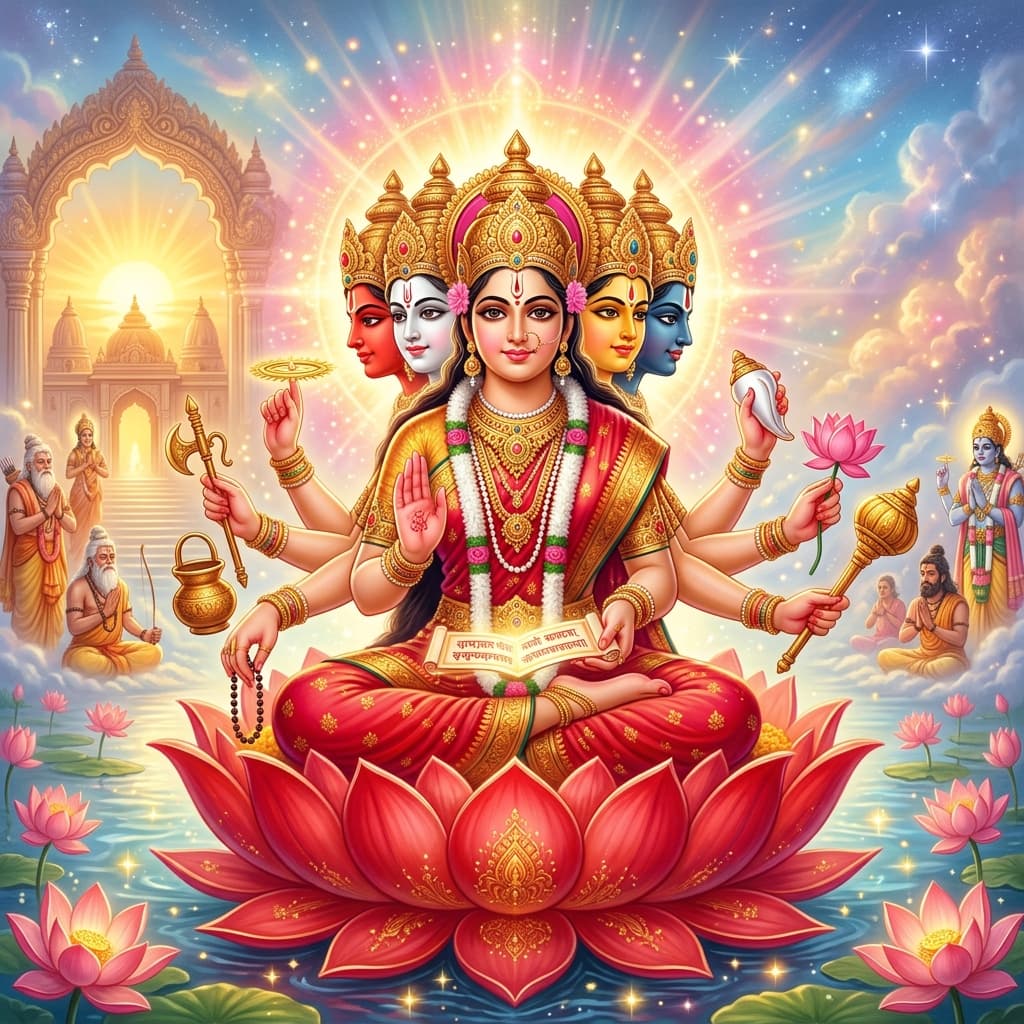
Lord Ganesha, called Vighnaharta and Siddhivinayak, is the presiding deity of knowledge, wisdom, and prosperity. His form is special—elephant head, small body, large ears and trunk, which symbolize knowledge, patience, and discretion. He is considered the first worshipped in all works, and any auspicious work begins with the remembrance of his name.
According to mythological stories, Ganesha ji was born from Mother Parvati's austerity and love. Lord Shiva accepted him as a son and later gave him an elephant head. His vehicle is a mouse (Mushak), which indicates subtlety and humility. Ganesha ji's favorite modak is offered as prasad. His four hands hold an ankush, pash, modak, and blessing mudra.
Ganesha ji is called 'Vighnaharta' because he removes obstacles from devotees' lives and 'Siddhidata' because he provides knowledge and success. He is not only a guide to material prosperity but also to spiritual progress.
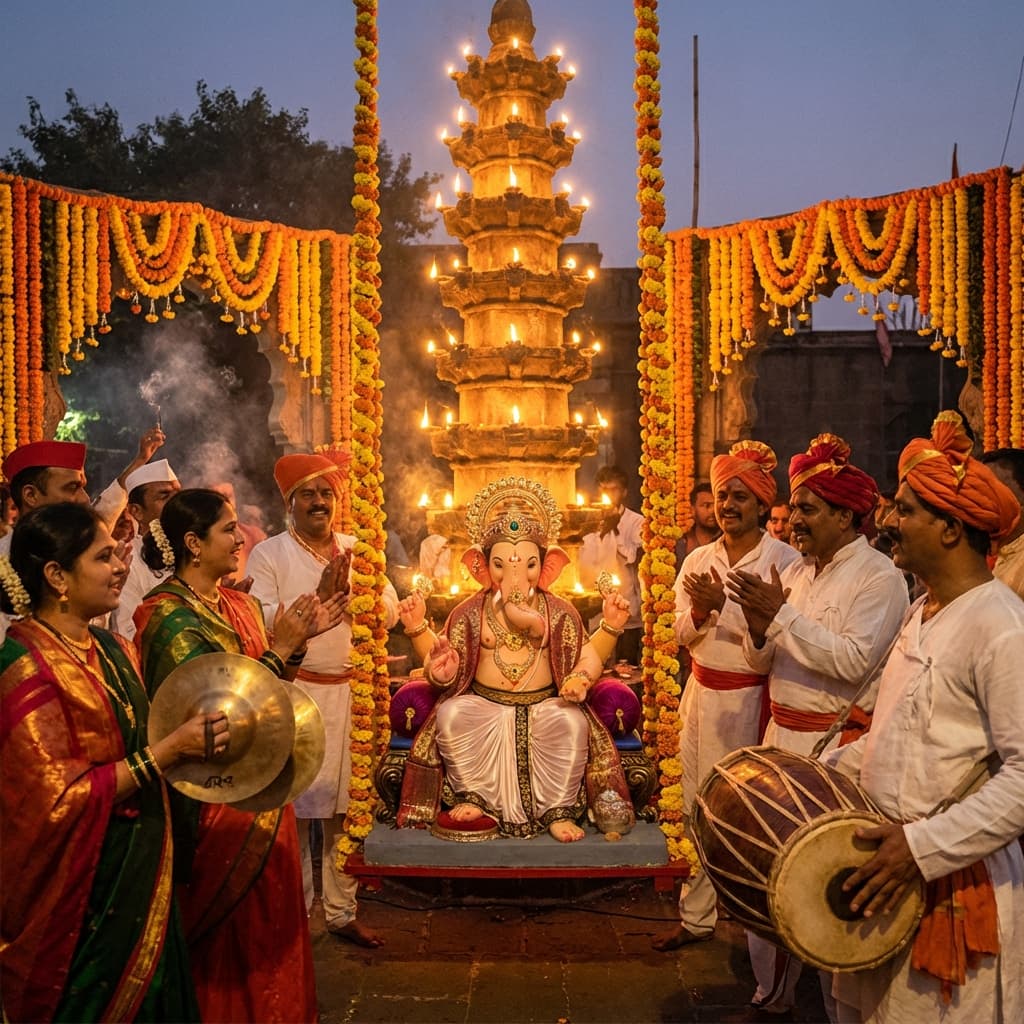
Ganesh Chaturthi is his main festival, celebrated with great pomp on Shukla Chaturthi of Bhadrapada month. This festival is especially famous in Maharashtra and South India, where devotees install Ganpati Bappa's idols in homes and pandals for ten days and perform worship. The festival concludes with immersion on Anant Chaturdashi day.
Ganesha ji's glory is described in Vedas, Puranas, and Upanishads. Special mention of his leelas and teachings is found in Skanda Purana and Ganesha Purana. Devotees worship him with reverence, considering him an ideal of intelligence, discretion, and success.
Ganesha PuranaMudgal PuranaSkanda PuranaMahabharata (according to mythology, Ganesha assisted in writing Mahabharata)Rigveda Stotra
FAQ (Frequently Asked Questions)
When is Ganesh Chaturthi celebrated and what is its importance?
Ganesh Chaturthi is celebrated on Bhadrapada Shukla Chaturthi—usually in August/September. This day is considered as the birth festival of Lord Ganesha. Traditionally, this festival is celebrated at both family and community levels: idols are installed in homes and public pandals, kirtan, bhajan, and cultural programs are organized, and finally immersion takes place. Spiritually, this is considered an appropriate time to pray for removal of obstacles and wisdom-strength before starting something new.
How to perform simple home worship of Ganesha—what is the easy method?
For home worship, choose a clean place, place Ganesha's picture/idol, light lamp-offering, offer flowers and modak (or any sweet). Chant simple mantras like 'Om Gam Ganapataye Namah' and read some bhajan or a small stotra. Keep devotion and surrender in mind during worship—this is most important. If possible, offering small bunches of durva is traditionally considered auspicious.
What meaning does the symbol of Ganesha's vehicle mouse (Mushak) indicate?
The mouse symbolically represents small desires, worries, and subtle obstacles. Presenting Ganesha making that small creature his vehicle teaches that small desires can be controlled with the power of intelligence and discretion, and they can also be put to our service. This gives the message of victory over humility and subtlety.
Which major mantras are prevalent for Ganesha and what is their brief meaning?
Prominent mantras include 'Om Gam Ganapataye Namah' and 'Vakratunda Mahakaya...' 'Om Gam Ganapataye Namah' is a simple and powerful mantra that salutes Ganesha and focuses the mind. 'Vakratunda...' stotra is a prayer for Ganesha's form, complexity, and obstacle-free state—chanting these mantras with devotion brings stability, fear-removal, and inspiration for success in the mind.
What kind of community events are common on Ganesh Chaturthi?
Ganesh Chaturthi has large idols in public pandals; collective aarti, dramas, folk culture, and cultural competitions are organized. Community prasad distribution, social charity, and eco-friendly immersion initiatives have also increased. In many cities, processions and music-dance also take place at pandal level, which increase local unity.
Is Ganesha's history found in texts—in which texts is he primarily described?
Stories related to Ganesha are found in many Puranas—especially Ganesha Purana, Skanda Purana, and some mention of his relationships is found in ancient suktas. His praise is also found in Mahabharata and some Vedic texts. Different traditional stories describe birth, elephant-head story, and wisdom-symbol metaphors.
Which form of Ganesha's worship is considered suitable for which purpose?
Ganesha's various forms—such as Vighnaharta (obstacle removal), Siddhivinayak (siddhi and success), Balganesh (affectionate worship)—are worshipped for different purposes. If you are starting new work, travel, or exam, remembering Vighnaharta/Siddhivinayak is considered especially fruitful. But basically, Ganesha worship is generally useful for wisdom, surrender, and auspicious beginning.
What things should be kept in mind while performing immersion (Visarjan) during Ganesh Chaturthi?
While performing immersion, environmental care is extremely necessary—if possible, adopt eco-friendly idol/decoration and take measures for water drainage/pollution. Maintain discipline in community immersion, follow local rules, and if performing private immersion, choose safe place and time. In many places, controlled immersion options are now available at sacred water-shores—their use has increased.
Is Ganesha worship limited only to Hinduism or does it have influence in other cultures/communities?
Mainly Ganesha is connected to Hindu tradition, but his symbols (wisdom, obstacle-removal, beginning) are also adopted in global cultural contexts; Ganesha's special place is seen in Southeast Asian art and some contemporary art/literature. In many multi-cultural communities, Ganesha festivals are celebrated along with local customs.
What is considered traditional prasad for offering to Ganesha?
Traditionally, modak, laddus, and sweet dishes are considered dear to Ganesha. In some places, milk, fruits, and special dishes are also offered. According to local customs, use of durva/tulsi etc. is also seen. Having devotion and pure mind while offering prasad is most important.
How should Ganesha's stories be taught to children so that both devotion and morality are obtained?
For children, stories should be simple, dramatic, and full of moral understanding—such as the symbolic meaning of Ganesha and mouse, Ganesha's example of handling work with intelligence, or the story related to Mahabharata writing (writing condition). Through pictures, songs, and small drama-activities, these stories give moral education and devotion message to children in an attractive way.
Are there spiritual or mental benefits from Ganesha worship—what does the scientific perspective say?
From religious and spiritual perspective, Ganesha devotion is considered helpful in bringing peace, self-confidence, and positive attitude towards obstacles in the mind. Modern psychological studies indicate that regular mantra-chanting, meditation, and community bhajan-kirtan can reduce stress and have positive effects on mental health—thus devotion practices can indirectly benefit.
Are there some special fasts or fasting practices prevalent for Ganesha—what are examples and purpose?
Some regional fasts are prevalent for Ganesha—such as keeping fast on Sankashti Chaturthi (Krishna Paksha Chaturthi of every month) and performing special worship, and keeping proper fast/fasting in the ten-twelve day festival of Ganesh Chaturthi. The purpose of these fasts is mental restraint, devotion-growth, and prayer for special problem/obstacle removal.