The Complete Hanuman Chalisa Guide: History, Meaning, How & When to Read, and Benefits
Everything in one place — who wrote the Hanuman Chalisa and why, what its verses mean, the correct way and best time to recite it, its benefits, and how it compares to Bajrang Baan.
Full text
Read Hanuman Chalisa — full lyrics in Hindi
Read the complete Chalisa with meaning and recitation guidance on DharmaPath.
Read ChalisaHistory and Origin
Hanuman Chalisa was composed by the great poet Goswami Tulsidas, who also wrote the Ramcharitmanas. Tradition holds that he composed it by Hanuman’s own grace.
It is written in Awadhi — a language close to Hindi that millions of devotees still read with ease today. The word “Chalisa” comes from “chalis” (forty) — the hymn has forty verses, hence the name.
Meaning of the Opening and Key Verses
Beginning with ‘Shri Guru Charan Saroj Raj...’, the devotee remembers guru and Ram. ‘Jai Hanuman Gyan Gun Sagar’ salutes Hanuman as the ocean of wisdom and virtue, and ‘Ram Doot Atulit Bal Dhama’ praises him as Ram’s messenger and abode of limitless strength. Running through all forty verses is one central message: Hanuman’s valor, his devotion to Ram, and his protection of devotees.
Three lines devotees return to most: ‘Bhoot Pishach Nikat Nahi Aave’ — protection from negative forces, and from the mind’s own fear; ‘Nase Rog Hare Sab Peera’ — a prayer for relief from physical and mental suffering; and ‘Sankat Kate Mite Sab Peera, Jo Sumire Hanumat Balbeera’ — whoever remembers Hanuman finds their troubles easing, the line devotees lean on most in hard moments.
How to Read It Correctly
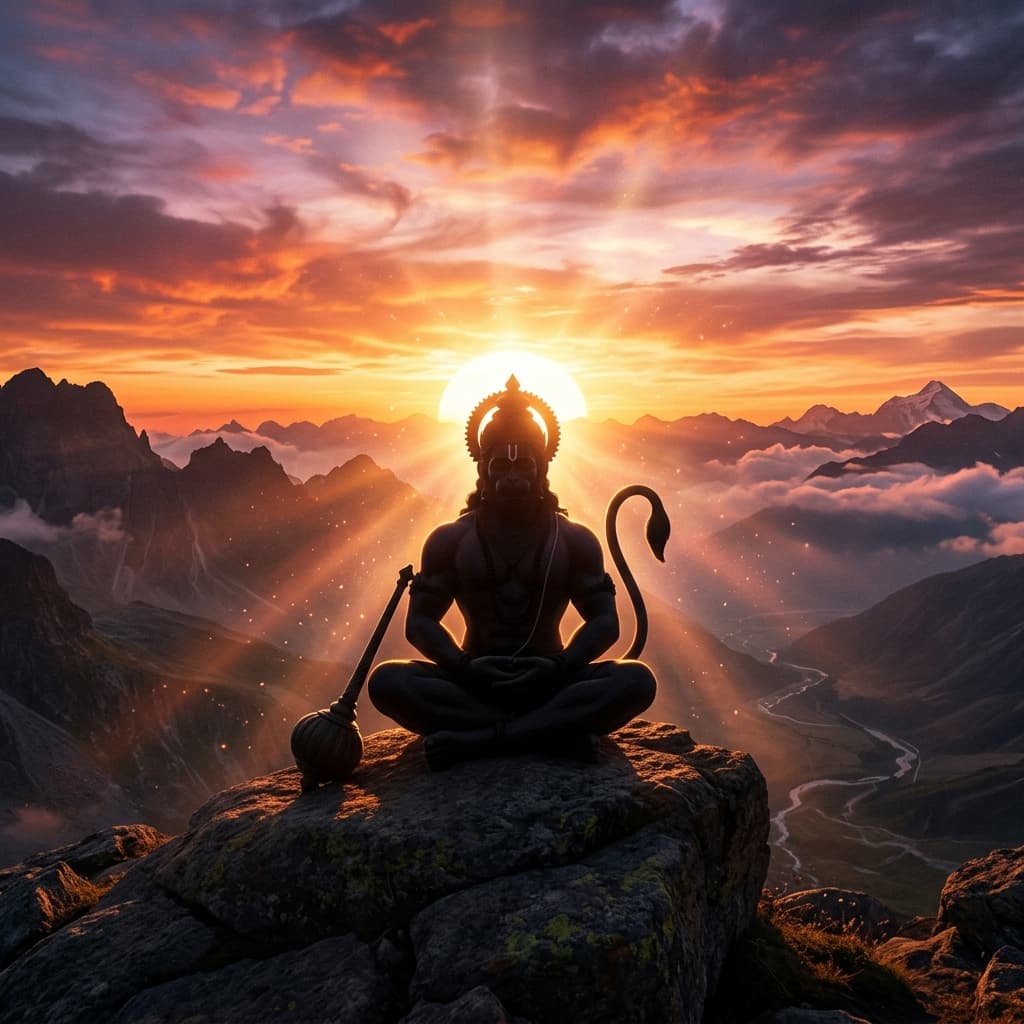
Purity of body and surroundings deepens the recitation — bathe if you can, and keep your phone on silent. Placing a small idol or picture of Hanuman in front of you helps focus; a lamp or incense is optional. Before starting, say ‘Jai Shri Ram’ or ‘Jai Hanuman’ once and resolve to read the full Chalisa with devotion.
Sitting in Sukhasana facing east or north is traditionally preferred; a straight-backed chair works fine if that's not possible. Pronounce the words clearly and keep a calm, rhythmic pace — not too fast, not too slow.
For special prayers or difficult times, some devotees take a vow of 108 full recitations, using a 108-bead mala to count; if 108 in one day isn't realistic, the count can be spread across 11 or 21 days. But consistency matters more than volume — one full Chalisa daily, done with attention, is considered more beneficial than an occasional long session.
Best Time to Recite
Morning — ideally during Brahma Muhurta, roughly 96 minutes before sunrise — is considered best, since the mind is naturally calmer and clearer then. It's a good way to start the day with courage and focus, especially helpful for anyone dealing with anxiety or trouble concentrating at work.
Evening or night recitation is just as popular; many devotees read it once before sleep to settle the mind, which helps those who stay stressed through the day or feel restless at bedtime.
Tuesday and Saturday are considered Hanuman's special days — visiting a temple, wearing red or yellow, and lighting a jasmine-oil lamp are common traditions on these days. Recitation on these days is believed to be especially fruitful, but daily practice remains the best approach overall.
Benefits of Daily Recitation
A regular practice does more than mark time — it anchors it. When recitation happens at a fixed time each day, the mind starts associating that moment with peace and protection, turning the practice from a mechanical task into a steadying rhythm that holds through busy or uncertain days.
Remembering Hanuman is traditionally associated with courage and resilience; breathing naturally steadies during recitation and emotional restlessness often softens. ‘Bhoot Pishach Nikat Nahi Aave’ is often understood as protection from the mind's own demons — fear, despair, anger — as much as anything external.
Lord Hanuman is the ocean of strength, wisdom, and knowledge; meditating on him is said to awaken similar resolve in the reciter. It's often recommended for anyone working through self-doubt, said to ease an inferiority complex and cultivate a more positive outlook.
The effect isn't limited to the mind. ‘Nase Rog Hare Sab Peera’ is chanted with the intent of supporting the body's resilience alongside its more central spiritual purpose, and reciting after a morning bath, with a clear mind, is said to bring sustained energy through the day.
For Fear and Anxiety
Hanuman is worshipped as the remover of difficulties and the lord of courage, and many devotees turn to the Chalisa specifically during anxious or fearful periods. The line ‘Sankat Kate Mite Sab Peera’ is a direct reassurance: you are not alone. The rhythm of recitation itself slows the breath and returns attention to the present moment, which is part of why the practice helps.
A simple way to use it for anxiety or sleeplessness: read the full Chalisa once in the morning, and again whenever difficulty arises, in a calm voice. 20–30 minutes before sleep, repeat it softly or mentally, resting attention especially on ‘Bhoot Pishach Nikat Nahi Aave.’
One important note: the Chalisa is a spiritual practice, not a substitute for medical care. For serious mental health concerns, seek professional help alongside — not instead of — devotional practice.
Hanuman Chalisa vs. Bajrang Baan — When to Read Which
Both hymns are devoted to Hanuman, but they serve different purposes. The Hanuman Chalisa is built for daily devotion — it can be read morning, evening, or night with a calm mind, focuses on praise, remembrance, and peace, and suits nearly every age and situation. For anyone new to this practice, starting here is the simplest and safest path.
The Bajrang Baan is considered a more intense, crisis-focused hymn, traditionally read with particular timing and purity — some devotees reserve it for Tuesdays and Saturdays, or for moments of real difficulty, while the Chalisa remains the daily practice. If you want to eventually take up Bajrang Baan, the traditional advice is to first build a steady Chalisa practice, then adopt the Baan with proper guidance.

Naam Jaap
5 Miraculous Benefits of Ram Naam Jaap: The Science of the Mahamantra
Ram is not merely a name, but the energy of the entire cosmos. Explore how chanting Ram Naam brings deep internal mental peace.
Hanuman Devotion
Hanuman Ansh: Neem Karoli Baba, Hanuman Bhakti, and the Message of Seva
As Hanuman Ansh draws attention, understand Neem Karoli Baba's life through Hanuman devotion, seva, love, feeding others, and remembrance of God.