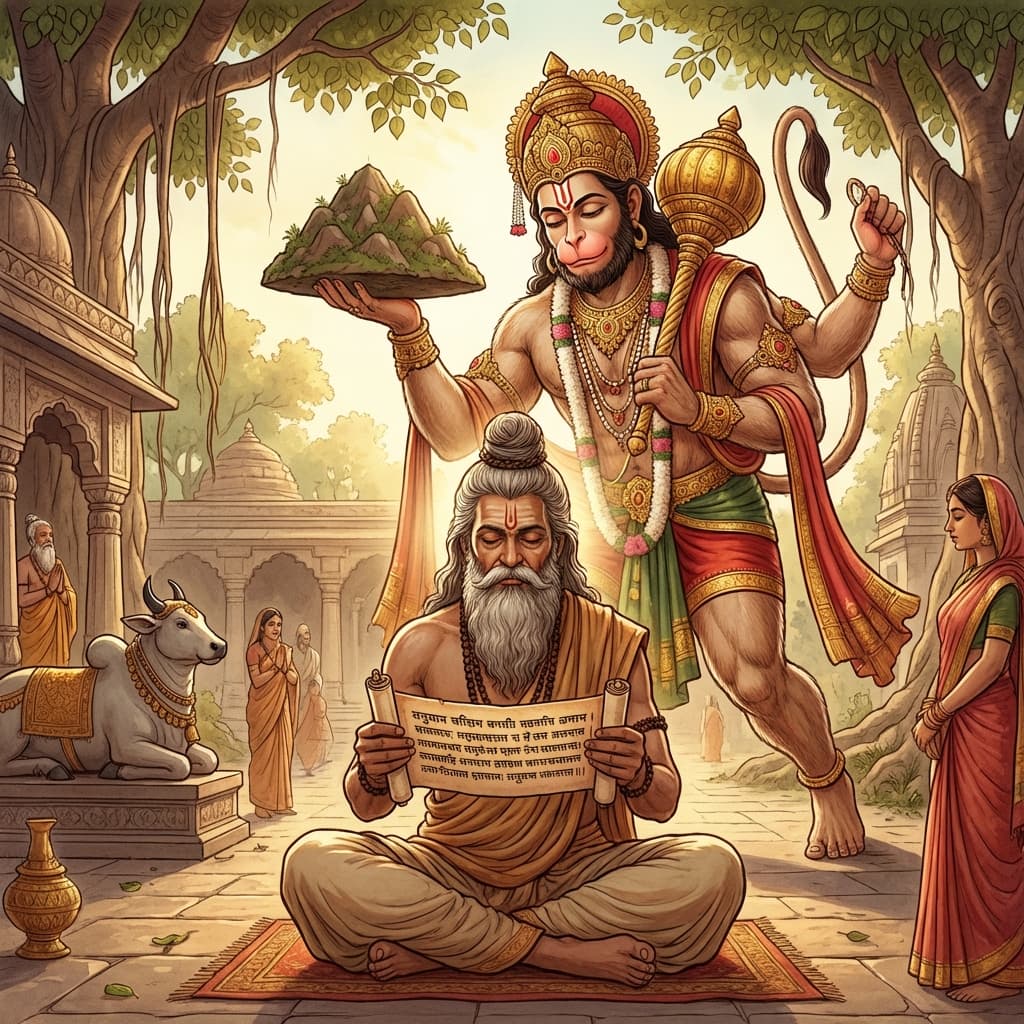

Hanuman Ansh: Neem Karoli Baba, Hanuman Bhakti, and the Message of Seva
As Hanuman Ansh draws attention, understand Neem Karoli Baba's life through Hanuman devotion, seva, love, feeding others, and remembrance of God.
Full text
Read Hanuman Chalisa — full lyrics in Hindi
Read the complete Chalisa with meaning and recitation guidance on DharmaPath.
Read ChalisaWhy This Article Matters
In early September 2026, Hanuman Ansh became a widely discussed devotional film. Multiple reports describe it as a film connected with the life of Neem Karoli Baba and his devotion to Lord Hanuman. That naturally raises a sincere question for devotees: after hearing about the film, where can one find careful and respectful context about Maharaj ji?
DharmaPath is not approaching this as a film review. This article uses the moment as a devotional entry point to understand Neem Karoli Baba, his teachings, and the form of Hanuman bhakti in which prayer becomes service, compassion, and remembrance of God.
What Was Verified About Hanuman Ansh
Based on available film listings and recent reports, Hanuman Ansh is a 2026 Hindi devotional-biographical film connected with Neem Karoli Baba. IMDb and film portals list its runtime at about 2 hours and 30 minutes, while recent reports identify August 7, 2026 as its theatrical release date.
India Today and The Indian Express reports identify Vishal Chaturvedi as the director. Several reports describe the film as a low-budget word-of-mouth success. Box-office figures change quickly, so they should be read as early-September 2026 media reporting rather than as permanent spiritual or historical facts.
Who Was Neem Karoli Baba?
Neem Karoli Baba, lovingly called Maharaj ji by devotees, is remembered as one of the most revered saints of the twentieth century. Devotional sources often identify his family name as Lakshmi Narayan Sharma. Because firm historical details are fewer than devotees' lived accounts, writing about him requires both reverence and care.
The place most widely associated with him is Kainchi Dham near Nainital in Uttarakhand. Government tourism and regional references describe it as an ashram on the Nainital-Almora road, known because of Neem Karoli Maharaj ji. Its Hanuman temple and annual bhandara tradition are especially meaningful for devotees.
Maharaj ji's Teaching: Love, Service, and Remembering God
The teaching most widely associated with Neem Karoli Baba is simple: love everyone, serve everyone, feed everyone, remember God. It is not a complex philosophical slogan but a daily practice. For a devotee, it means worship should gradually change the way we treat others.
Seva here is not only charity. Feeding someone, supporting a person in pain, practicing patience at home, and remembering God in the mind are all forms of service. That is why, in Hanuman bhakti and Maharaj ji's tradition, strength does not mean domination; it means humility and protection.
Neem Karoli Baba and Hanuman Bhakti
Lord Hanuman holds a central place in the devotional world associated with Maharaj ji. In his ashrams and temples, Hanuman is not only an object of worship but a living reminder of service, Ram naam, humility, and complete surrender.
From this perspective, a title like Hanuman Ansh can remind devotees that Hanuman bhakti is not merely a desire to witness miracles. True devotion steadies the mind, reduces ego, and makes a person more ready to serve others.
What Devotees Can Learn From the Film
If a devotee watches Hanuman Ansh, it should not be treated as the final biography or a scriptural source. Devotional cinema often works through emotion, story, and symbol. After watching it, a stronger practice is to learn about Maharaj ji's teachings, Kainchi Dham, and Hanuman's ideals through reliable sources as well.
The film's most useful devotional message may be this: the search for God opens into service of people. Like Hanuman ji, devotion should have strength, but that strength should be humble; it should remember God, but that remembrance should become visible in life.
What to Read Next on DharmaPath
If this subject deepens your interest in Hanuman devotion, begin with a steady reading of Hanuman Chalisa. Sunderkand is one of the finest texts for understanding Hanuman ji's service, courage, and surrender to Shri Ram. Reading about Hanuman ji's form, story, and mantras can also keep the devotion balanced.
Keep one simple practice: each day, say 'Jai Shri Ram' or 'Jai Hanuman' and do one small act of service for someone. This is the form of bhakti in which temple, prayer, and daily life begin to move in the same direction.
Frequently asked questions
Questions devotees often ask
Is Hanuman Ansh based on Neem Karoli Baba?
According to recent news reports and film listings, Hanuman Ansh is a 2026 devotional-biographical film connected with Neem Karoli Baba and his Hanuman devotion.
What is Neem Karoli Baba's main teaching?
The teaching most widely associated with him is: love everyone, serve everyone, feed everyone, and remember God. Devotees practice it through service and compassion in daily life.
Where is Kainchi Dham?
Kainchi Dham is a well-known ashram and pilgrimage place near Nainital in Uttarakhand, on the Nainital-Almora road, associated with Neem Karoli Maharaj ji.
Hanuman Devotion
The Complete Hanuman Chalisa Guide: History, Meaning, How & When to Read, and Benefits
Everything in one place — who wrote the Hanuman Chalisa and why, what its verses mean, the correct way and best time to recite it, its benefits, and how it compares to Bajrang Baan.

Festivals and Traditions
Kartik Purnima and Dev Deepawali 2026: Meaning and Traditions
Explore Kartik Purnima, Varanasi’s Dev Deepawali, regional customs, and a simple prayer at home.