Radha, considered the supreme beloved of Shri Krishna and the presiding deity of Braj, is worshipped as Hladini Shakti—the supreme power of devotion and divine love. Radha's life and form are not just historical or mythological stories, but she is considered a living symbol of infinite compassion, surrender, and pure love. Barsana, as her birthplace, is famous worldwide, and devotees still come to her feet seeking love and peace.
Radha-Krishna's love is the supreme ideal of pure devotion. In Raslila and leelas of Braj, Radha's place is supreme—so much so that Shri Krishna also considers her love and surrender as his power. In Gaudiya Vaishnava tradition, Radha is called 'Krishna-Pranadhika,' meaning that she is more established in Krishna's heart than Krishna himself.
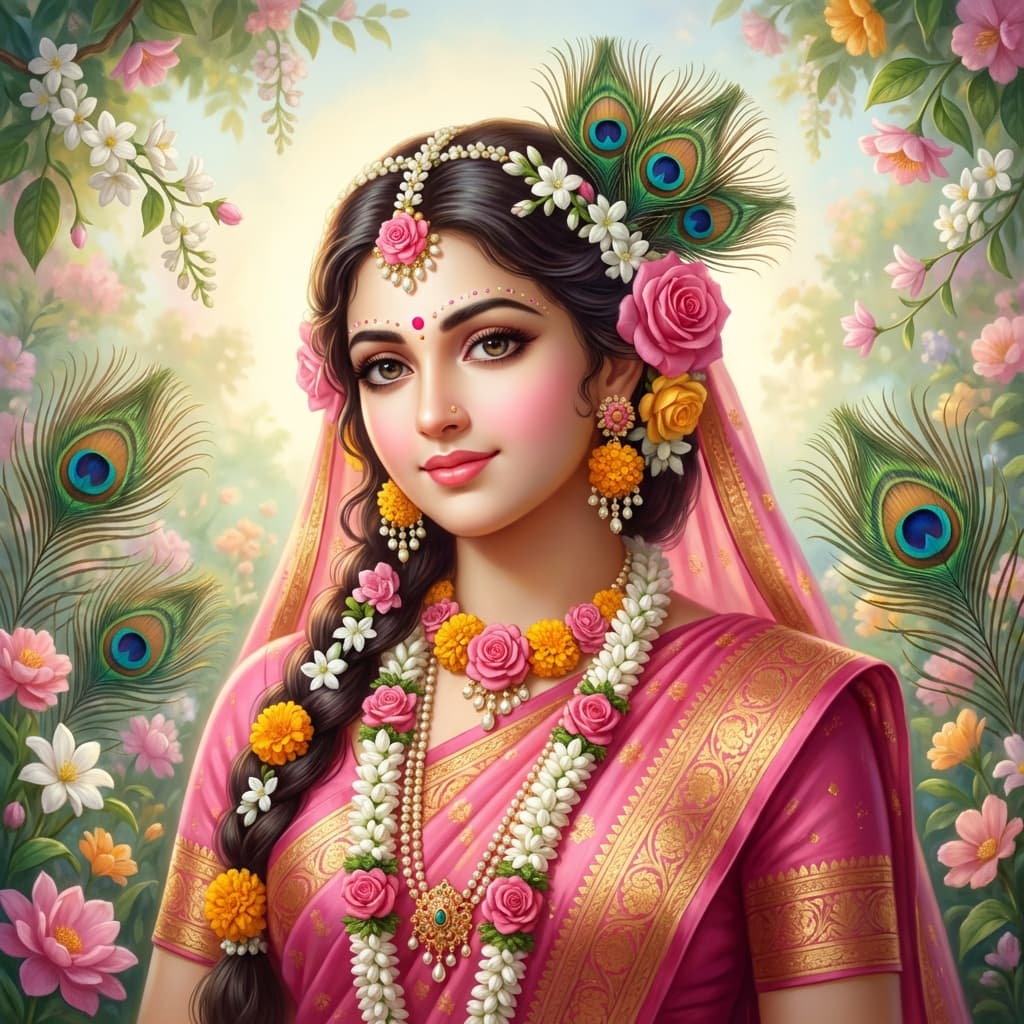
Her form is a wonderful combination of tenderness and beauty. Ghaghra-choli, veil, lotus-like face, and flower garlands make her form even more divine. Her name is always associated with Shri Krishna—where Krishna is, there is Radha, and where Radha is, there is Krishna.
Radhashtami, celebrated on Shukla Ashtami of Bhadrapada, is her main worship date. On this day, devotees keep fasts and worship Radha-Krishna, praying for pure devotion, good fortune, and peace. This festival is celebrated with great enthusiasm in Barsana and Vrindavan. Additionally, Lathmar Holi is also a festival connected with Radha-Rani's leela, in which the traditions of Barsana and Nandgaon are famous worldwide.
Radha's glory is specially described in religious texts like Brahmavaivarta Purana, Geet Govind, and texts of Bhagavata sect. Devotees worship her not only as Krishna's beloved but also as the complete goddess of devotion, compassion, and divine love.
Brahmavaivarta Purana (Radha-Krishna Leela)Geet Govind (Jayadeva)Texts of Bhagavata sect and Gaudiya Vaishnava acharyas
FAQ (Frequently Asked Questions)
When does Radhashtami fall and what are the main traditions for celebrating it?
Radhashtami is celebrated on Bhadrapada Shukla Ashtami (usually August/September). On this day, devotees keep fasts, joint worship of Radha-Krishna is performed, bhajan-kirtan and swing/Raslila events are organized. In Barsana and Vrindavan, special morning processions, displays, and ornate idols are shown in temples. Spiritually, this day is a festival of Radha's heart-surrender and devotion-energy.
What does Radha's meaning as 'Hladini Shakti' mean?
Hladini Shakti is that divine energy which gives experiential form to the Supreme Soul's (Krishna's) bliss. Radha is considered the embodiment of this power—she is that sadhak power that awakens and maintains Krishna's bliss. Philosophically, this power describes that state of devotee-heart where love becomes complete and absolute.
Is Radha and Krishna's relationship just a love story or does it also have spiritual meaning?
This is not just a love story—spiritually, Radha-love is a symbol of soul-Supreme Soul union. Understanding Krishna as Supreme Soul and Radha as individual soul, their relationship shows a devotion-metaphor (conscious surrender). In Gaudiya traditions, Radha is considered Krishna-Pranadhika, meaning more established in Krishna's heart than Krishna himself—this is a symbol of devotion's ultimate limit.
What history/story is the Lathmar Holi tradition connected to and what is its cultural importance?
According to the folk tale of Lathmar Holi, the women of Barsana (under Radharani's leadership) welcomed the men of Nandgaon by 'hitting' them lightly with sticks (lath)—this is a fun and symbolic tradition. Culturally, it has taken the form of a women-power festival; it shows folk songs, dance, and community participation and is an important part of Braj's local identity.
What should be offered in Radha's worship—which flowers/prasad are suitable?
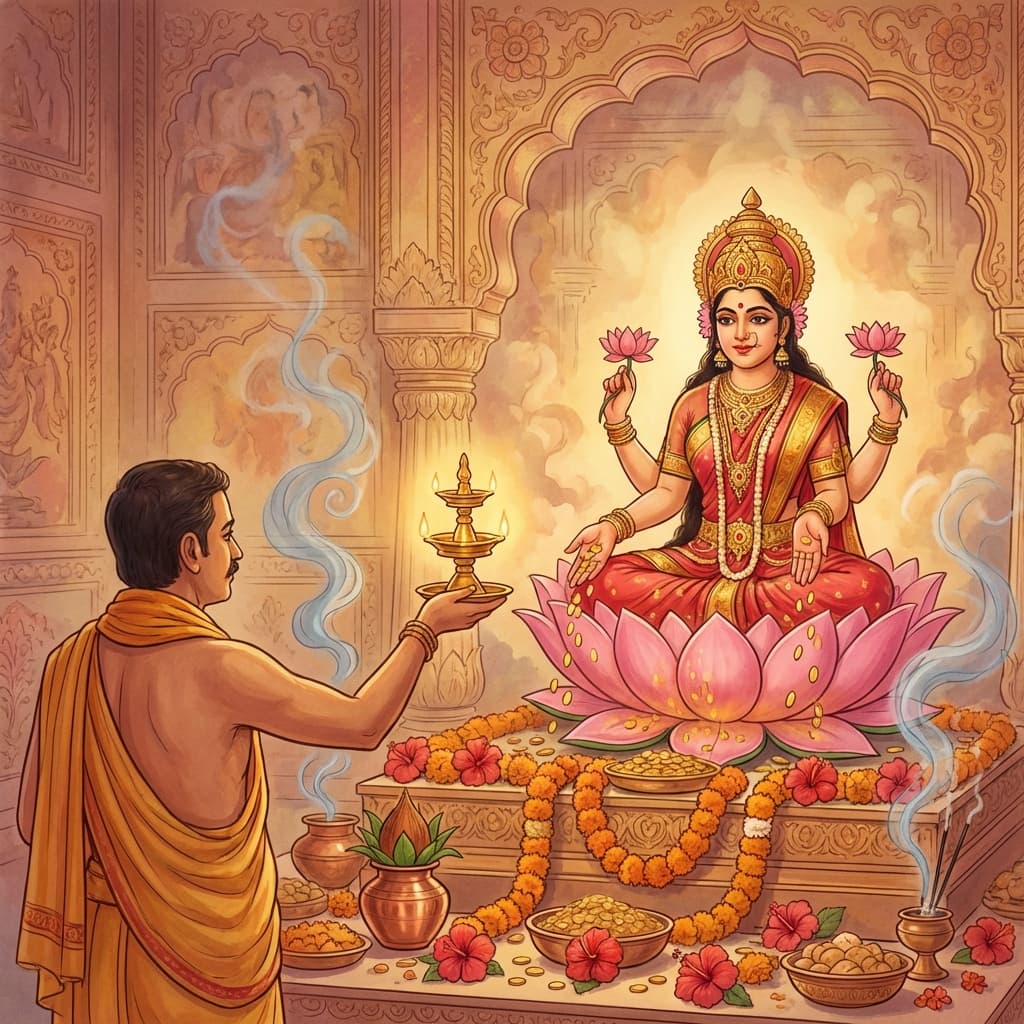
In Radha's worship, tender flowers like lotus, rose, jasmine are highly suitable; lotus is especially considered dear due to her purity. In prasad, sweet dishes—laddus, peda, kheer—or fruits and fresh flower garlands are offered. Surrender and pure mind are most important—devotion of heart is more important than any material.
Which mantras are prevalent for chanting Radha and what benefits are said?
In folk-tradition, the main mantra 'Om Vrishabhanujayai Vidmahe Krishnapriyayai Dhimahi. Tanno Radha Prachodayat' has special importance. Simple chant 'Radhe Radhe' is also universally prevalent. Chanting these mantras increases compassion, depth of love, and mental peace in the devotee's heart—according to devotion-tradition, these names are means to reach supreme devotion.
Are there theological differences in Radha traditions—what are the main perspectives?
Perspectives on Radha differ in various traditions—in Gaudiya Vaishnavas, Radha is given supreme place, otherworldly position from Krishna; other Vaishnava and Shaiva/Shakta traditions have different interpretations on her place and expression. Some traditions consider Radha as a historical character, while devotion-based traditions see her as a divine element. These differences depend on perspective and spiritual tradition—both have their own cultural and religious importance.
What major places should be noted when visiting Barsana/Vrindavan and what are travel tips?
In Barsana, Shriji (Radha Rani) Temple, Kirti Temple, and Bhanugadh Hill are important; in Vrindavan, Radha-Vallabh, Banke Bihari, and other Radha-related temples are prominent. Travel tips: Crowd is more during festivals—book accommodation in advance; check local darshan rules and worship times; maintain light and polite conduct; be sensitive to local bhog/prasad and traditional art-culture.
What is the important contribution of major literature/poetry and poets based on Radha?
Jayadeva's 'Geet Govind' is invaluable poetry of Radha-Krishna love—it presents Radha's love-feeling in a very beautiful style. Additionally, saints and devotion-acharyas—such as Surdas, Raidas, and Gaudiya acharyas—have made special contributions on Radha. Even in modern times, poetry, drama, and music on Radha have been continuously created.
What recommendations/methods can be for devotees participating in Radhashtami?
Avoid fasting or unnecessary excess; on Radhashtami, morning bath, clean clothes, temple darshan, and participation in bhajan-music. If you are keeping fast, follow local customs and food rules; respect prasad and participate in community service—this gives both spiritual and social fruit of the festival.
How to apply the meaning of Radha worship in personal spiritual practice?
The essence of Radha-devotion—selfless love and surrender—can be applied in personal life in the form of small actions, charity, and discipline. By bringing daily remembrance (japa), bhajan, and compassion (karuna) into practice, Radha-conduct can be adopted—meaning devotion should be shown not only in words but also in actions.
What iconographic points should be kept in mind when making idols/pictures of Radha-Krishna?
Radha is often shown on Krishna's left, in tender posture and flower-ornamented; her facial expression should be compassionate and peaceful. In color-form, use of traditional Braj-style and delicate ornamentation (lotus, peacock feather) keeps the original feeling alive. Also pay attention to the subtlety of interaction (gaze, slight smile) between Radha-Krishna—this creates rhythm and rasa.
Is Radha worship limited to any particular group or tradition, or is it open to all devotees?
Radha-devotion is centered in many traditions—especially Gaudiya Vaishnava. But Radha's message (devotion, compassion, love) is universal and useful for devotees of all inclinations. Therefore, her worship and remembrance are widely used in general—whether one follows a particular tradition or not.