How to Count Naam Jaap: Rules of Using a Mala Properly
There are strict pristine rules for efficiently using a Tulsi or Rudraksha Mala. Why ignore the Sumeru bead? Discover the profound massive science securely holding this ancient ritual intact.
Why Exactly Are There Exclusively 108 Beads?
In many Hindu traditions, 108 is considered a sacred number. You’ll find it in practices like mantra repetition, temple circumambulation, and japa counts.
One traditional explanation links 108 to the 27 nakshatras (lunar constellations) and their 4 padas (27 × 4 = 108). Other explanations connect it with breath counts and cosmic symbolism. The key idea is: 108 represents wholeness.
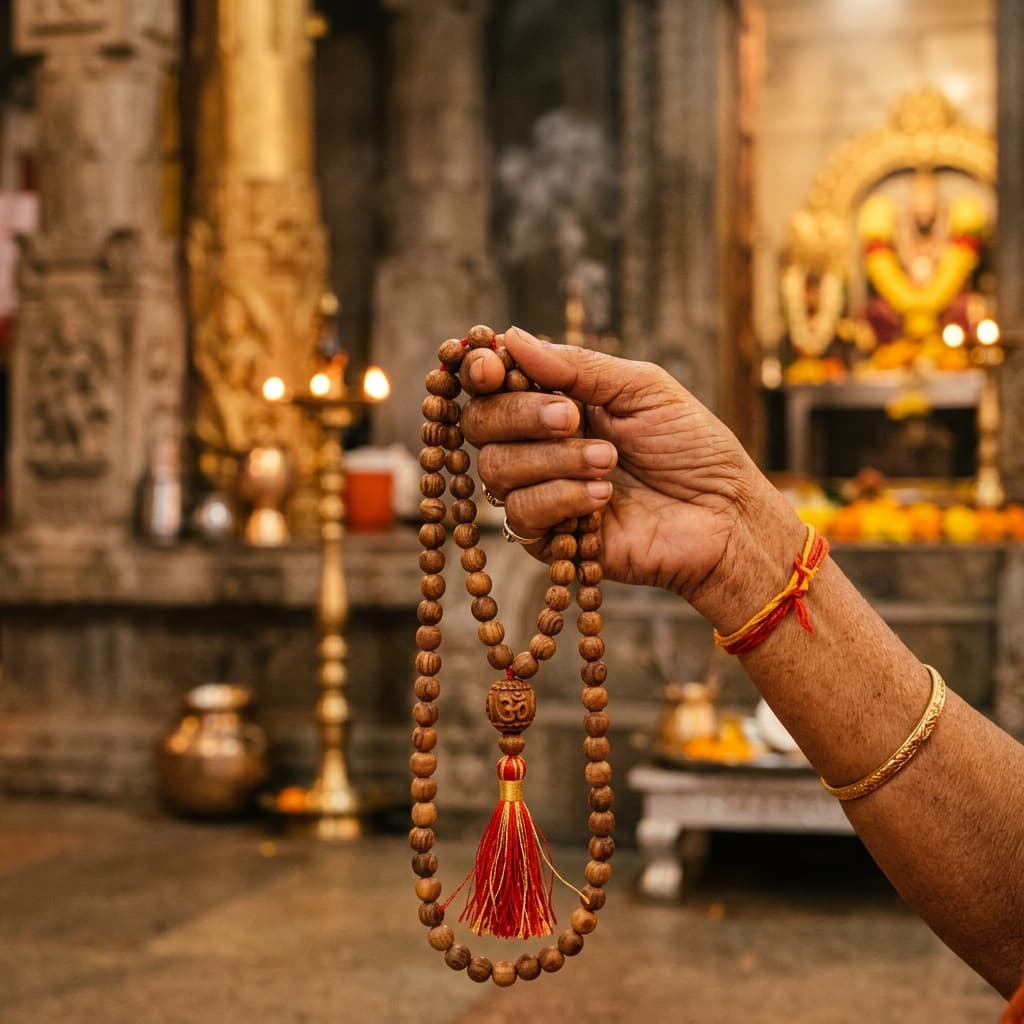
After 108 beads there is usually a larger bead called the “Sumeru” (or “Guru bead”). It marks the end of one round and reminds the devotee to pause, reflect, and continue with respect.
Strict Imperative Rules of Turning the Beads
A common guideline is to move the beads with the thumb and middle finger. Many devotees avoid using the index finger as a reminder to keep the mind humble and focused.
When you reach the Sumeru (Guru bead), do not cross over it. Instead, turn the mala around and start the next round in the opposite direction. This keeps the “marker bead” respected as a boundary.
To stay steady and private, many people keep the mala above the waist and use a small japa bag (gomukhi). These are traditional supports—not rules to fear—so practice with sincerity and calm.

Naam Jaap
5 Miraculous Benefits of Ram Naam Jaap: The Science of the Mahamantra
Ram is not merely a name, but the energy of the entire cosmos. Explore how chanting Ram Naam brings deep internal mental peace.

Naam Jaap
How to Start Naam Jaap at Home: A Complete Guide
The best way to begin Naam Jaap is to keep it simple, calm, and sustainable. A little clarity and consistency go a long way. Read the complete guide.