Ayodhya
"Birthplace of Lord Shri Ram"
History & Stories
- According to the Ramayana, King Dasharatha made Ayodhya his capital, and it was here that Lord Ram was born.
- Through the ancient and medieval periods, Ayodhya remained under the rule of various dynasties and grew as a place of pilgrimage.
- Even through the colonial era and after independence, Ayodhya's temples, religious institutions, and cultural traditions endured.
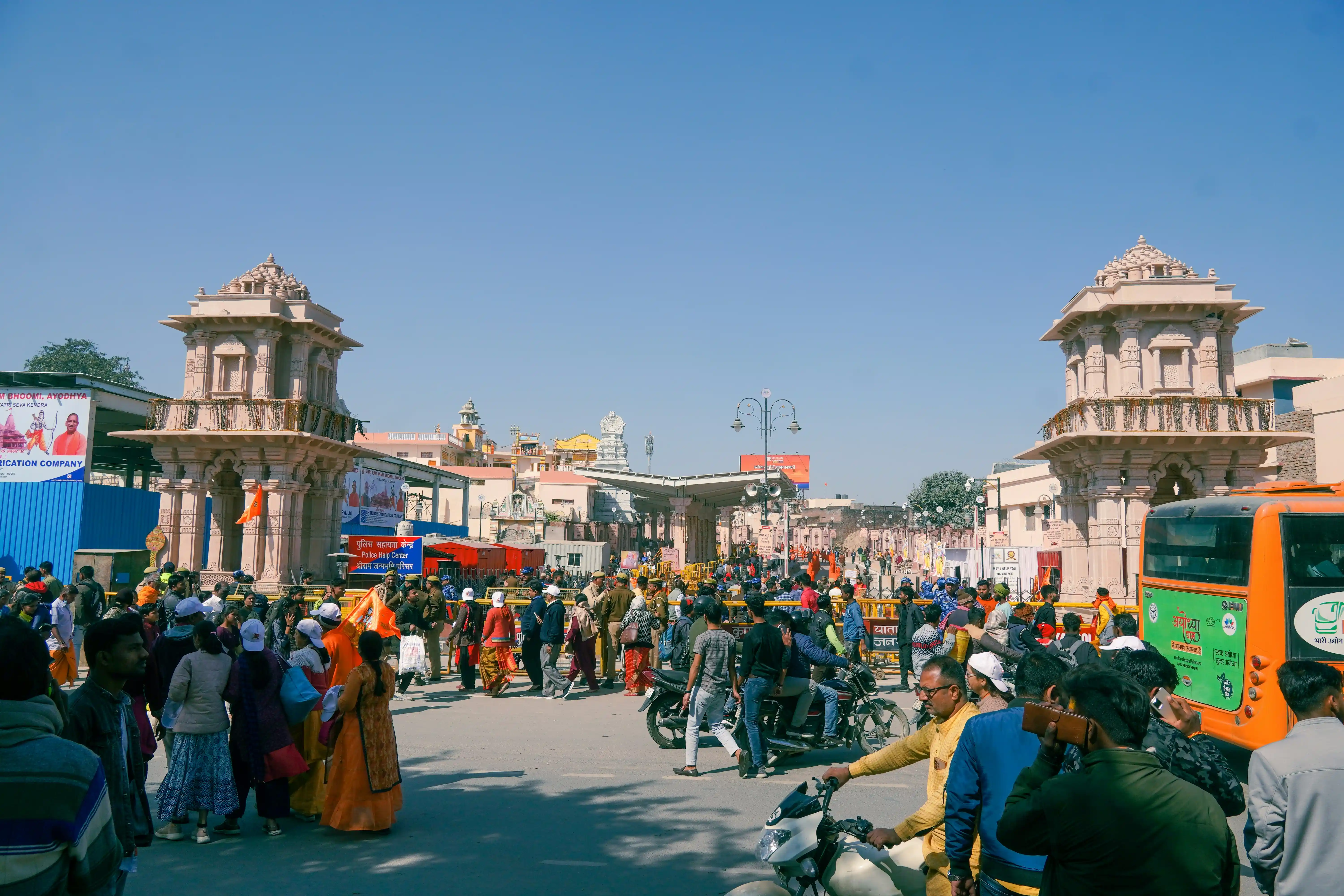
- The reconstruction of the Ram Janmabhoomi Temple was largely completed in 2023-24 and grandly inaugurated in 2024, making the site a subject of even greater attention.
How to Reach
Map
FAQs
When was the Ram Janmabhoomi Temple built and reconstructed?▼
The present temple built on Ram Janmabhoomi had its reconstruction largely completed in phases through 2023-24 and was grandly inaugurated in 2024. The reconstruction drew wide historical, archaeological, and religious attention - darshan rules and arrangements are published from time to time by the temple management.
What is the best time to visit Ayodhya?▼
October to March is considered the most suitable time - the weather is cool and pleasant, making days comfortable for travelers. The city is very lively during festivals (especially Ram Navami and Deepotsav), but crowds and accommodation can be an issue then, so advance booking is essential.
What are the sightseeing places in Ayodhya - is it only Ram Janmabhoomi?▼
No - besides Ram Janmabhoomi, Ayodhya has Hanumangarhi, Kanak Bhawan, Dashrath Mahal, the ghats of the Saryu river (especially Navagraha Ghat and Dashashwamedh Ghat), and many ancient temples and religious sites. Local markets also offer a range of traditional religious items and souvenirs.
How well connected is Ayodhya, and how can I travel there?▼
You can reach by air via Maharishi Valmiki International Airport, Ayodhya (about 10 km away), by rail via Ayodhya Junction which offers major connectivity, and by road via routes from Lucknow, Gorakhpur, and Varanasi. Local taxis, buses, and rickshaws are available.
What should I keep in mind during darshan - dress code and mobile/camera rules?▼
Wearing modest, culturally appropriate clothing is recommended at the temples. Mobile phones and cameras may be subject to security restrictions in several temple premises - some sanctums may prohibit carrying them in at all, so follow local instructions before entering.
What are the stay and food options in Ayodhya like?▼
The city has dharamshalas, mid-range and some higher-end hotels, along with local eateries. Book accommodation in advance during festivals. Food is mostly vegetarian with North Indian cuisine; several religious institutions also run small langar (free meal) facilities.
Are local guides or priest services available in Ayodhya?▼
Yes - local guides, priests, and religious guides are generally available. If you're planning a specific ritual or yagna, contact the temple management or a dharamshala in advance for authentic, reputable services, and confirm fees and timing beforehand.
What should I keep in mind while visiting Ayodhya (safety/etiquette)?▼
Keep valuables secure in crowded areas, respect local rules and events, and avoid deserted areas after dark. Choose reliable transport options and plan ahead during crowded festival periods.
Are there other pilgrimage or sightseeing spots near Ayodhya?▼
Yes - the ghats of the Saryu river, Kanak Bhawan, Hanumangarhi, and several smaller nearby temples and religious centers are worth visiting. You can get guidance on nearby cultural and religious sites from the local tourist information center.
What do most people ask when they visit Ayodhya?▼
The most commonly asked questions include the best time for darshan, how to get permission for a special puja or ritual, how to arrange a stay during festivals, and whether mobile phones/cameras/photography are allowed. Accurate answers are available through the local temple management and official announcements.