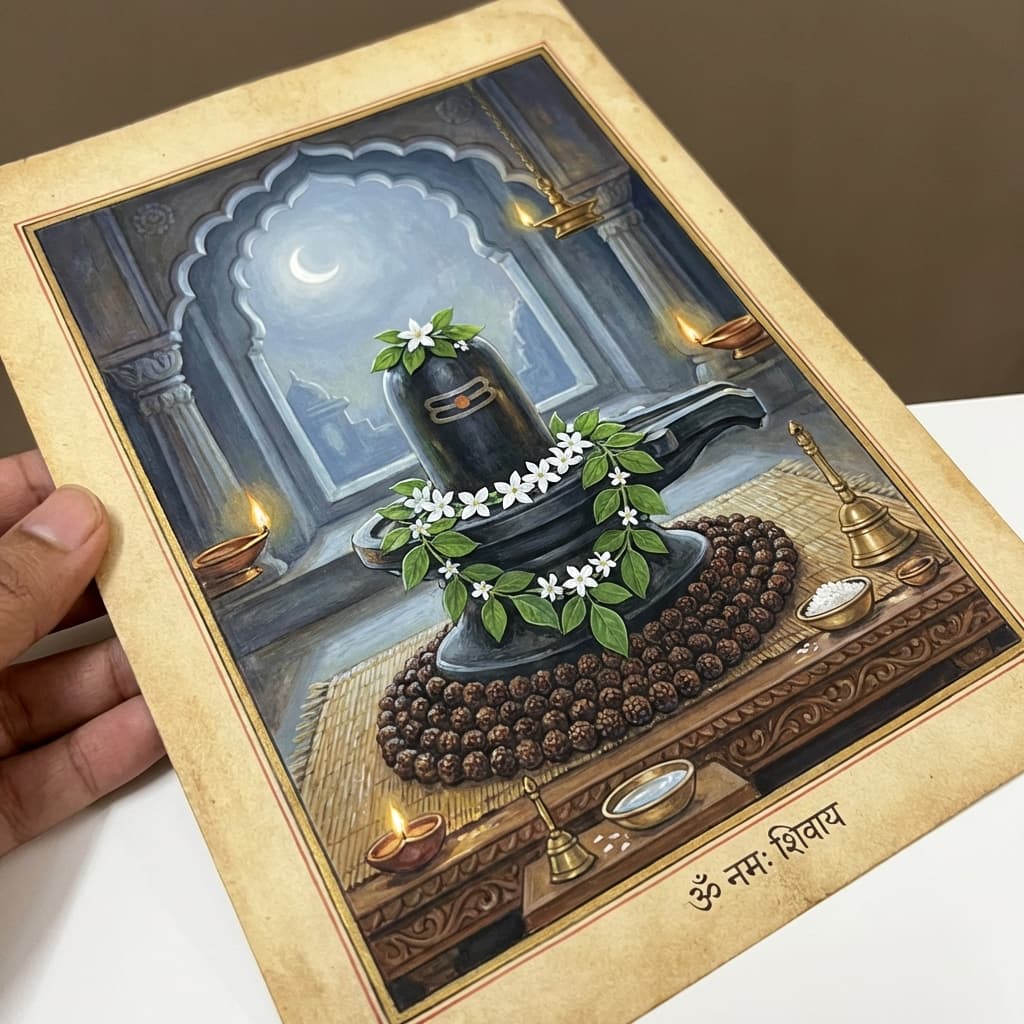

Om Namah Shivaya: Meaning, Chanting Method, and Spiritual Significance
Understand the meaning of Om Namah Shivaya, the symbolism of its five syllables, a simple chanting method, and practical guidance for beginners.
The Simple Meaning of Om Namah Shivaya
“Namah Shivaya” is commonly understood as “I bow to Shiva.” Here Shiva points not only to the divine form of Lord Shiva but also to auspiciousness, pure awareness, and the quiet presence within. Adding “Om” expresses reverence toward universal consciousness.
The mantra does not begin with a request. It teaches the ego to soften and bow before what is benevolent and sacred. Devotees therefore repeat it for remembrance, reflection, and inner stillness.
The Five Syllables of the Panchakshari Mantra
Because “Na-Ma-Shi-Va-Ya” contains five syllables, it is called the Panchakshari mantra. Shaiva traditions often associate them with the five elements—earth, water, fire, air, and space—reminding the practitioner that body and cosmos rest within the Divine.
Some traditions call the form with “Om” a six-syllable mantra. Both usages are found, so honor the pronunciation taught in your tradition and focus on meaning rather than arguing over labels.
Pronunciation and a Simple Chanting Method
Chant gently as “Om Na-mah Shi-va-ya,” slowly enough for each syllable to remain clear and without straining the breath. Sit comfortably with an upright posture, take three natural breaths, and repeat the mantra 11, 27, or 108 times.
If using a rudraksha mala, do not cross the Sumeru bead; turn the mala around after one round. Without a mala, use a set duration or count on your fingers. Numbers support discipline, but attention and devotion remain central.
Best Time and Daily Practice
Early morning, evening, and Mondays are traditionally considered auspicious for Shiva mantra practice. Still, the best time is one you can genuinely keep each day. Chant before a diya after bathing, or repeat it mentally while traveling or between daily tasks.
Beginners can use a seven-minute practice: one minute to settle, five minutes of mantra, and one minute of silence. Keeping the same time for at least 21 days helps the mind associate that part of the day with Shiva remembrance.
Understanding the Benefits with Balance
Regular mantra repetition gives attention one steady point, can settle breathing, and may teach us to pause before reacting. Devotionally, it keeps Shiva's qualities—detachment, compassion, fearlessness, and transformation—present in daily conduct.
Do not treat a mantra as medical treatment or a guarantee of miracles. Its effects are experienced differently according to the person, intention, and way of life. If a guru has given you a specific initiation or method, prioritize that guidance over general online advice.
Frequently asked questions
Questions devotees often ask
Can Om Namah Shivaya be chanted without initiation?
Many devotees chant it sincerely as a general devotional practice. If your lineage requires initiation for a particular method, follow your guru or acharya's guidance.
How many times should Om Namah Shivaya be chanted?
Counts of 11, 27, or 108 are common. Beginners should start with a small consistent count and chant clearly without rushing.
Can I chant the mantra while walking or working?
Yes, mental remembrance can continue anywhere. For deeper meditation or mala japa, a safe, clean, quiet place is more supportive.

Naam Jaap
5 Miraculous Benefits of Ram Naam Jaap: The Science of the Mahamantra
Ram is not merely a name, but the energy of the entire cosmos. Explore how chanting Ram Naam brings deep internal mental peace.

Naam Jaap
How to Start Naam Jaap at Home: A Complete Guide
The best way to begin Naam Jaap is to keep it simple, calm, and sustainable. A little clarity and consistency go a long way. Read the complete guide.