Deep Spiritual and Scientific Meaning of the Aarti Lamp
The aarti lamp is more than ritual tradition. It symbolizes light, surrender, and inner awakening. Discover the profound meanings hidden behind it.
Symbol of Light's Victory Over Darkness
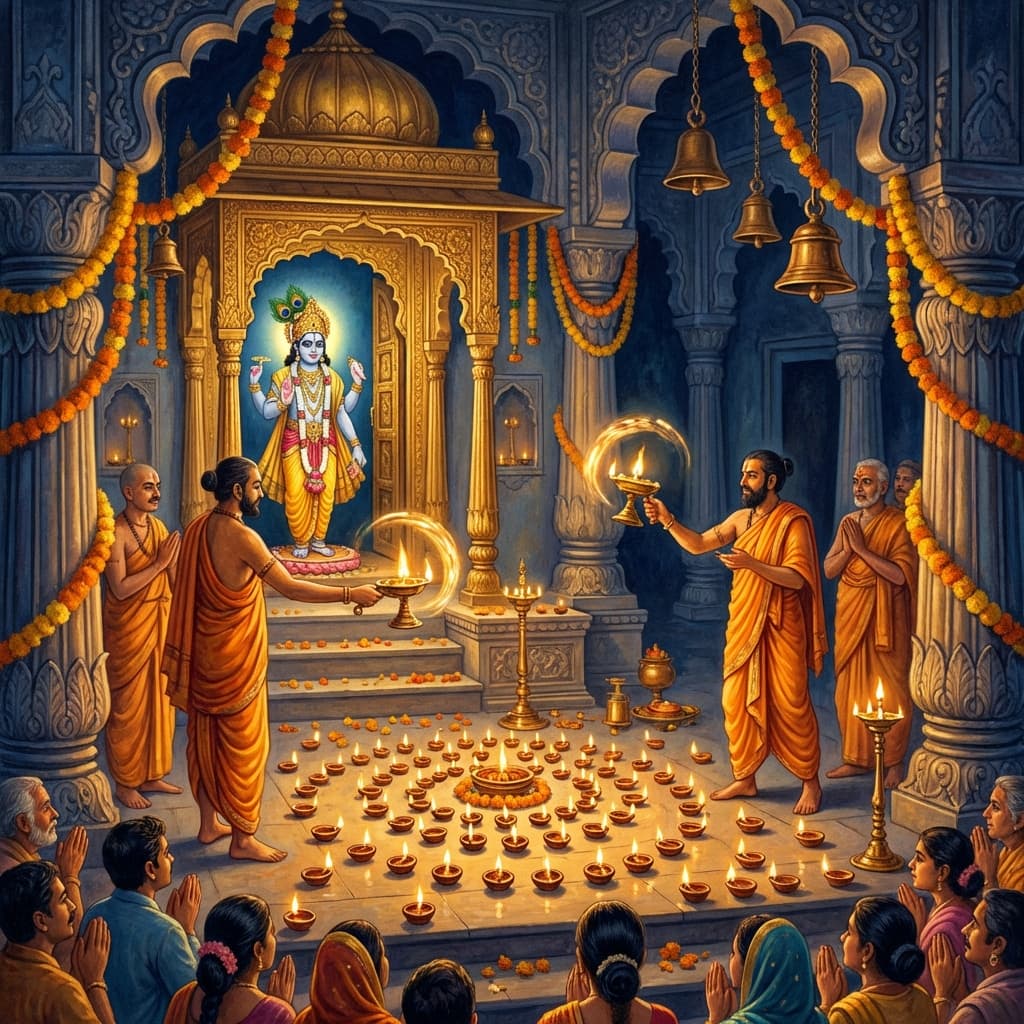
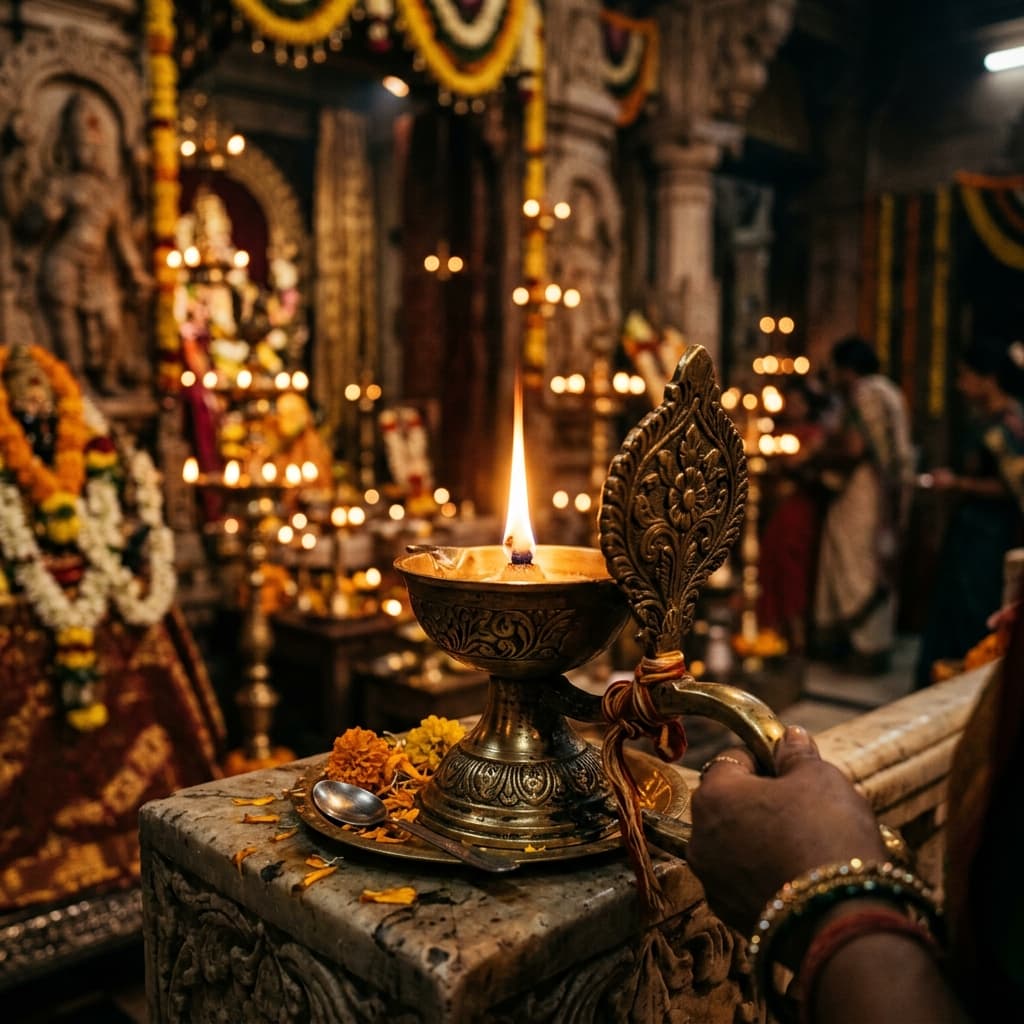
In Sanatan Dharma, the prayer 'Tamaso Ma Jyotirgamaya' (Lead me from darkness to light) holds immense significance. The Aarti lamp is the physical manifestation of this prayer. The lamp reminds us of light overcoming darkness. Moving the flame before the deity represents inviting divine light into every part of life.
As a devotee gazes at the flame, they experience both the outer illumination and their inner awakening. The flame stands as a direct metaphor for eliminating ignorance (darkness) through spiritual wisdom (light).
The Supreme is light itself, and the lamp is a medium to connect with that celestial energy. Just as a flame always travels upwards, it inspires human consciousness to constantly elevate itself.
Surrender and Destruction of Ego
The oil or ghee burning in the lamp symbolizes our desires and negative tendencies (vasanas), while the cotton wick represents our ego. When the lamp burns, the ego utilizes the desires to exhaust itself in the divine light.
The slowly vanishing fuel is a stark reminder of life's mortality. It signifies that the seeker is surrendering their ego, agitation, and limitations at the feet of the Divine. In the end, nothing remains but the pure light.
That is why inner humility during Aarti matters far more than just singing words. When we take Aarti (passing hands over the flame and touching our eyes), we are literally absorbing that purity and ego-less state into ourselves.
Representation of the Five Elements
According to Hindu philosophy, the entire universe comprises five core elements (Earth, Water, Fire, Air, and Space). The Aarti lamp is a beautiful amalgamation of all these elements.
The base of the lamp (copper or brass) represents 'Earth'. The ghee or oil flowing within represents 'Water'. The burning flame is the 'Fire' element. The oxygen that allows it to burn is 'Air', and the void in which it all exists is 'Space'.
Thus, performing Aarti for the deity is a profound, symbolic way of offering the gratitude of the entire cosmos back to its Creator.
The Scientific Perspective
Lighting a ghee lamp not only spreads a pleasant aroma but its gentle smoke also possesses anti-bacterial properties that purify the surrounding air. Using pure cow's ghee elevates the space with highly Sattvic energy.
Fixing one's gaze continually upon the flame of a lamp is an excellent eye exercise (Trataka). It strengthens ocular muscles while drastically improving attention span and decreasing mind wanderings.
During the transitional times of dawn (Brahma Muhurta) and dusk (Godhuli Vela), the light of the lamp sends a grounding energy signal to our Circadian rhythm, naturally nudging the mind into a state of deep relaxation.
Its Indispensable Place in Home Worship
In home worship, the Aarti lamp acts as the focal anchor of the atmosphere. Even a tiny flame can gather the entire family into a shared moment of profound reverence, gratitude, and calmness.
When Aarti is performed, the dance of the flame along with the ringing of bells and the blowing of the conch shell dispels all negative energy in the house, weaving a bright, positive aura.
If it is not performed in a hurry, but with paused mindful devotion, that same ordinary lamp transforms into a gateway of deep meditation, making you feel the divine presence intimately every single day.
Puja Guide
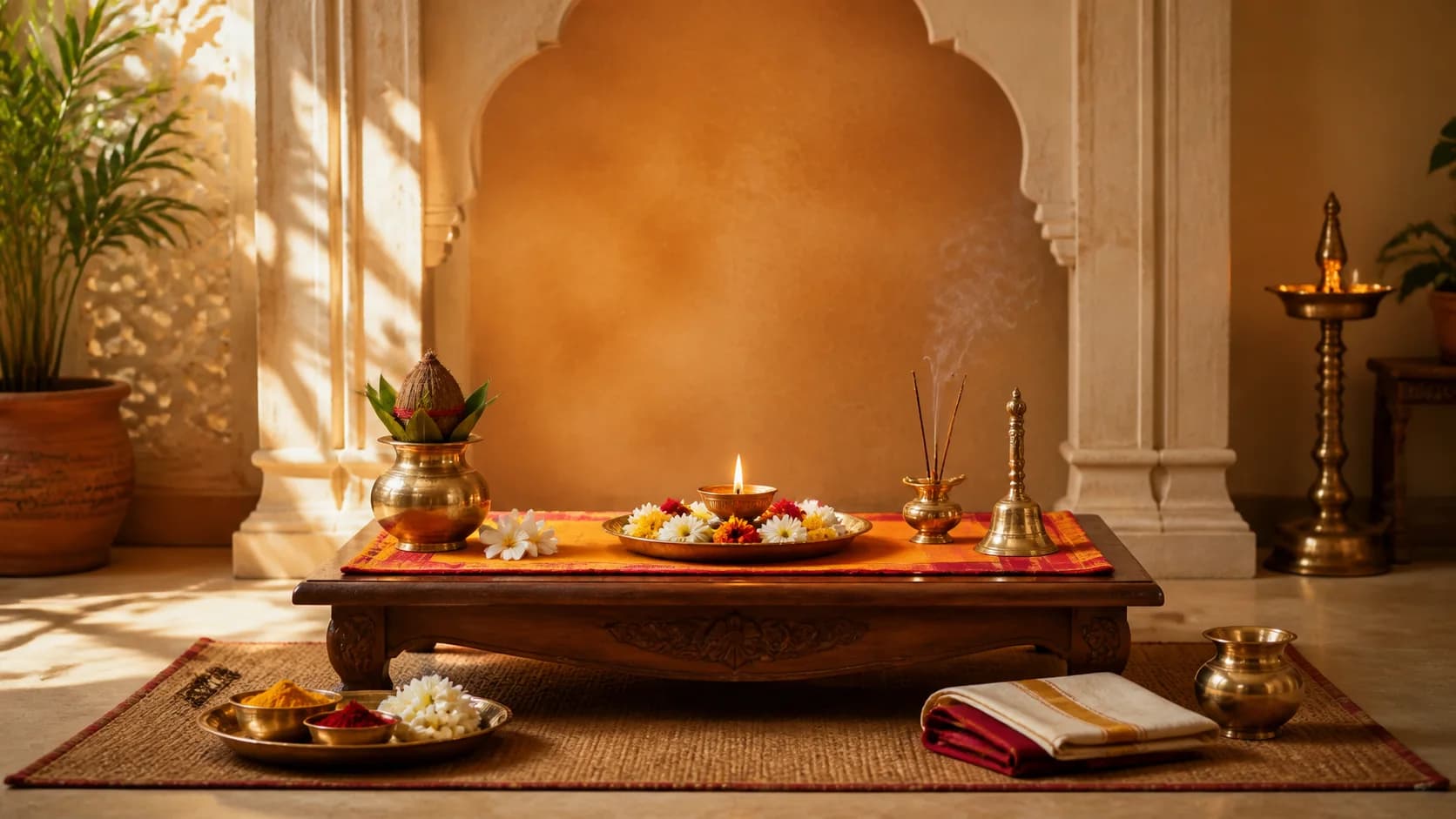
How to Do Puja at Home: A Simple Guide for Beginners
Starting a daily puja at home does not need to feel complicated. Learn a simple sequence from preparing the space to diya, mantra, aarti, and prasad.
Devi Worship
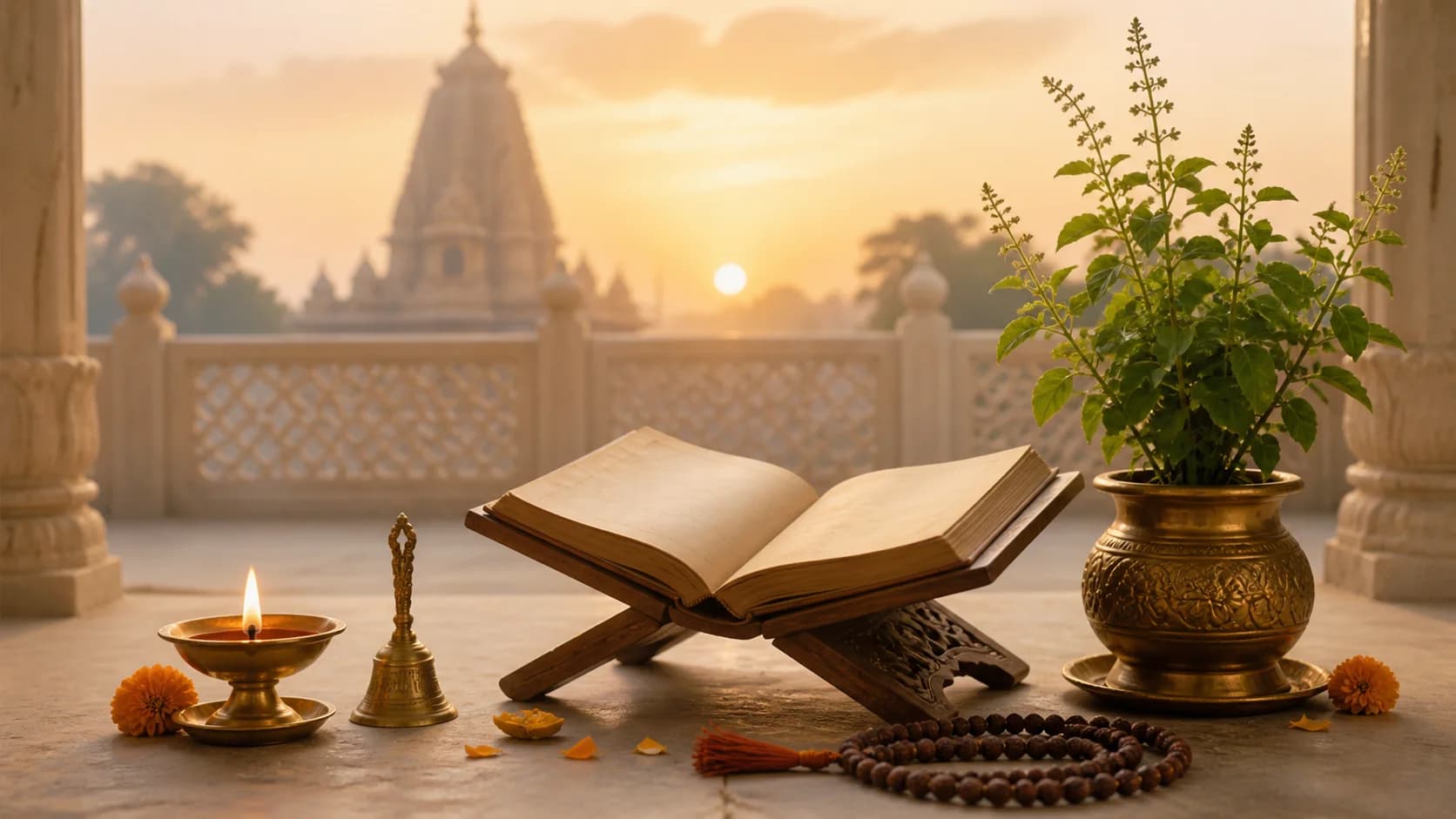
Sharad Navratri 2026: Ghatasthapana, Nine Days of Puja, Colors, and Sadhana
Understand Sharad Navratri 2026 dates, the meaning of Ghatasthapana, worship of the nine forms of Durga, fasting observances, Kanya Puja, and the journey toward Vijayadashami.